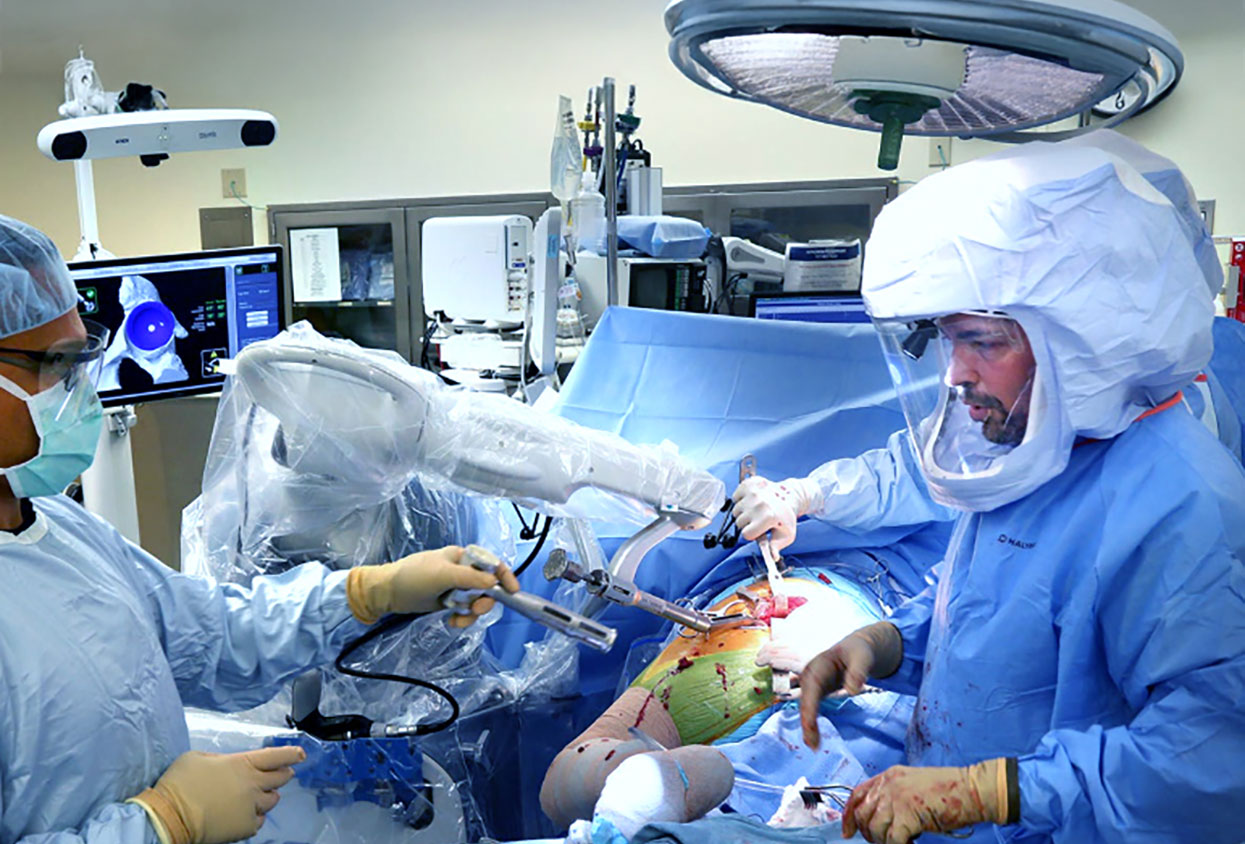
One late tray can throw off an entire day in an ambulatory surgery center. A single delayed case does not just cost that room fifteen or twenty minutes; it pushes every case scheduled behind it further from its start time. By the third or fourth case, staff are working through lunch, the last patient is waiting longer than expected, and the schedule that looked clean at seven in the morning has quietly fallen apart.
For many ASCs, this is not a rare event; it is a pattern. And the root cause rarely sits with the surgeon or the surgical team. It almost always starts before the case begins, in sterile processing, in tray assembly, in the handoffs that either go smoothly or do not.
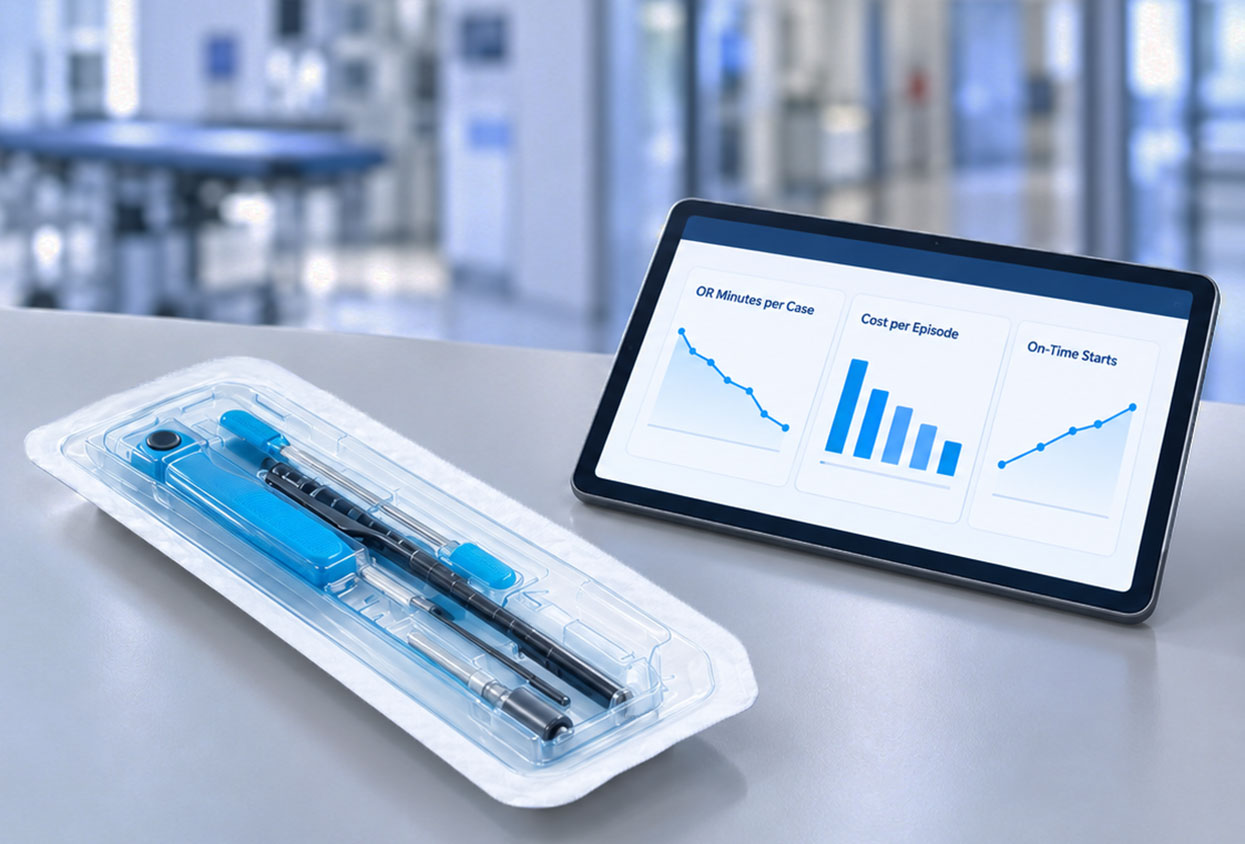
ECA Medical’s Surgery-Ready™ kits were built to remove that variable entirely. Instead of treating turnover delays as an unavoidable cost of doing business, they treat predictability as something that can and must be engineered into the schedule itself, case after case, not just on a good day.
That distinction matters more than it might seem. ASC leadership teams do not just want fewer delays; they want a schedule they can plan around, staff around, and grow around. A facility that cannot predict its own turnover time cannot reliably predict its own case volume, and that uncertainty shows up everywhere from staffing decisions to how confidently a facility can say yes to adding another surgeon, more cases or another center across town.
Turnover problems rarely show up as one big failure. They show up as a string of small ones. A tray arrives incomplete, and someone has to track down the missing instrument. A contamination check flags a wet load, and the whole set has to be reprocessed before the next case can start. None of these events is dramatic on its own, but they add minutes, and minutes compound across a surgical day.
The deeper issue is that most of this friction sits upstream of the OR, inside sterile processing, where it stays invisible until it causes a delay. A facility relying on multiple reusable trays is also relying on every one of those trays being cleaned, inspected, wrapped, and sterilized correctly, on time, every single day. When that chain has even one weak link, the OR feels it immediately, usually at the worst possible moment in the schedule.
Picture a typical morning. The first case starts on time because the trays were prepped the night before. In the second case, sterile processing is racing to keep up with the previous room's turnaround. By the third, a tray comes up short one instrument, and the circulating nurse has to track it down while the room sits idle. None of this was anyone's fault; it is simply what happens when a schedule depends on the outdated and unpredictable reusable instrument model.
A ECA Medical Surgery-Ready™ kit is not simply a sterile version of a standard tray. It is a procedure-specific configuration, built around exactly what a given case needs, so the team gets an efficient, effective workflow designed set of instruments instead of a generic set they have to sort through under pressure.
Because each kit arrives pre-configured and complete, the OR no longer depends on how quickly sterile processing can turn around a set. There is no reprocessing queue standing between one case ending and the next one starting. And because every kit is standardized, what is in the room is the same for every surgeon and every case, which takes the guesswork out of setup.
That also changes what the circulating team is doing in the minutes before a case. Instead of confirming that a reusable tray came back complete and properly sterilized, they are opening a kit that was already built correctly the first time. And since it has never been used before it is or course sterile.
That kind of consistency is at the center of why more facilities are moving toward single-use surgical instruments for their highest-volume procedures. And it is not just about sterility; it is about removing the variables that make one case unpredictable and the next one late.
Time, not instrument price, is the primary economic driver in an ASC. Efficiency, throughput, predictability, and schedule reliability are what a facility actually monetizes. Anything that delays turnover or creates a problem with reusable trays and instruments chips away at the expected economics
This is not a theoretical claim. A cost-modeling study of total knee arthroplasty found that switching from traditional reusable instruments to single-use instrumentation cut average OR turnover from 38.4 minutes down to 17.5 minutes and reduced the number of trays processed per case from eight down to one. That time savings was enough to fit an additional procedure into up to 51% of operating days across the 200 sites studied 1.
Translate that into a full schedule, and the impact is geometric. An extra case on half of a facility's operating days is significant; it is real, recurring revenue that the facility was already staffed and equipped to capture. It simply could not reach it because turnover time stood in the way.
For an ASC, fewer bad days caused by tray delays, wet loads, or contamination holds are not a minor operational win. This win inpacts the bottom line.
A single delay rarely stays contained to one room. It compounds across the day and often pushes staff into overtime. But the real cost is not just the extra hour on the clock. In one interdisciplinary workflow study, a 16-minute reduction in OR turnover time was enough to add roughly half a case per day on average [2]. Scaled across a full week and a full surgical team, that is the difference between a facility reliably doing two procedures a day and one that reliably fits in several more.
There is also a less visible cost to consider. Surgeons and staff notice when a facility runs smoothly, and they notice when it does not. A schedule that consistently slips affects surgeon satisfaction, and over time, it can affect where a surgeon chooses to bring their cases. Predictability is not just an operational metric; it is part of what makes a facility a place surgeons want to keep operating.
ECA Medical’s Surgery-Ready™ kits are not a product swap; they are an operational system built around predictable turnover. When the trays are already complete, sterile, and configured for the procedure at hand, the OR stops depending on sterile processing turnaround time and starts running on its own schedule. That is what makes Surgery-Ready™ kits worth building a facility's workflow around.
ECA Medical designs Surgery-Ready™ solutions specifically for the turnover demands ASCs face every day, from single-use instrument kits to the components built into them. If unpredictable turnover is eating into your case volume, talk to ECA Medical about building a surgery-ready kit program for your facility.
What makes a kit "Surgery-Ready™" versus a standard procedure tray?
A Surgery-Ready™ kit is pre-configured for a specific procedure, sterile out of the package, and complete, so the team is not assembling or double-checking a generic tray under time pressure. A standard reusable tray still depends on sterile processing to clean, inspect, and reassemble it correctly before every case, which introduces several steps that a Surgery-Ready™ kit simply does not need.
How much OR time can predictable turnover actually save an ASC?
Published cost-modeling research on single-use instrumentation found that average turnover time was cut nearly in half, from 38.4 minutes to 17.5 minutes, which was enough to add an extra case on more than half of the operating days at some sites studied. The exact savings will vary by facility and specialty, but the direction of the effect is consistent.
Do Surgery-Ready™ kits reduce the burden on sterile processing staff?
Yes. Because the kits arrive sterile and complete, sterile processing no longer needs to clean, inspect, and reassemble multiple trays per case, which frees up staff time and reduces the chance of a reprocessing bottleneck delaying the OR later in the day.
Can Surgery-Ready™ kits be customized to the surgeon's preference?
Kits can be configured around a specific procedure and surgeon preference while staying standardized enough that every case starts with the same complete set, which keeps the predictability benefit intact even as preferences vary between surgeons.
How do Surgery-Ready™ kits affect scheduling flexibility?
When turnover time is predictable instead of variable, schedulers can plan tighter case sequences with more confidence, giving the facility more flexibility to add cases or accommodate late additions without risking a domino effect of delays across the rest of the day.