Ask most operating room staff what immediate-use steam sterilization is for, and they will give you the textbook answer: a safety net for genuine emergencies, such as a dropped instrument, a torn wrapper, or a contaminated tray with no time for a full cycle. Ask how often it is actually used that way, and the answer gets quieter.
IUSS, once known as flash sterilization, was designed as a narrow exception to standard sterile processing, not a routine substitute for it. But when a team at Vanderbilt University audited a full year of hip and knee arthroplasty sterilization logs against accepted clinical indications, they found a wide gap between intended use and actual practice 1. This article covers what that research found, why the pattern shows up in orthopedic ORs, and what it means for reducing reliance on IUSS.
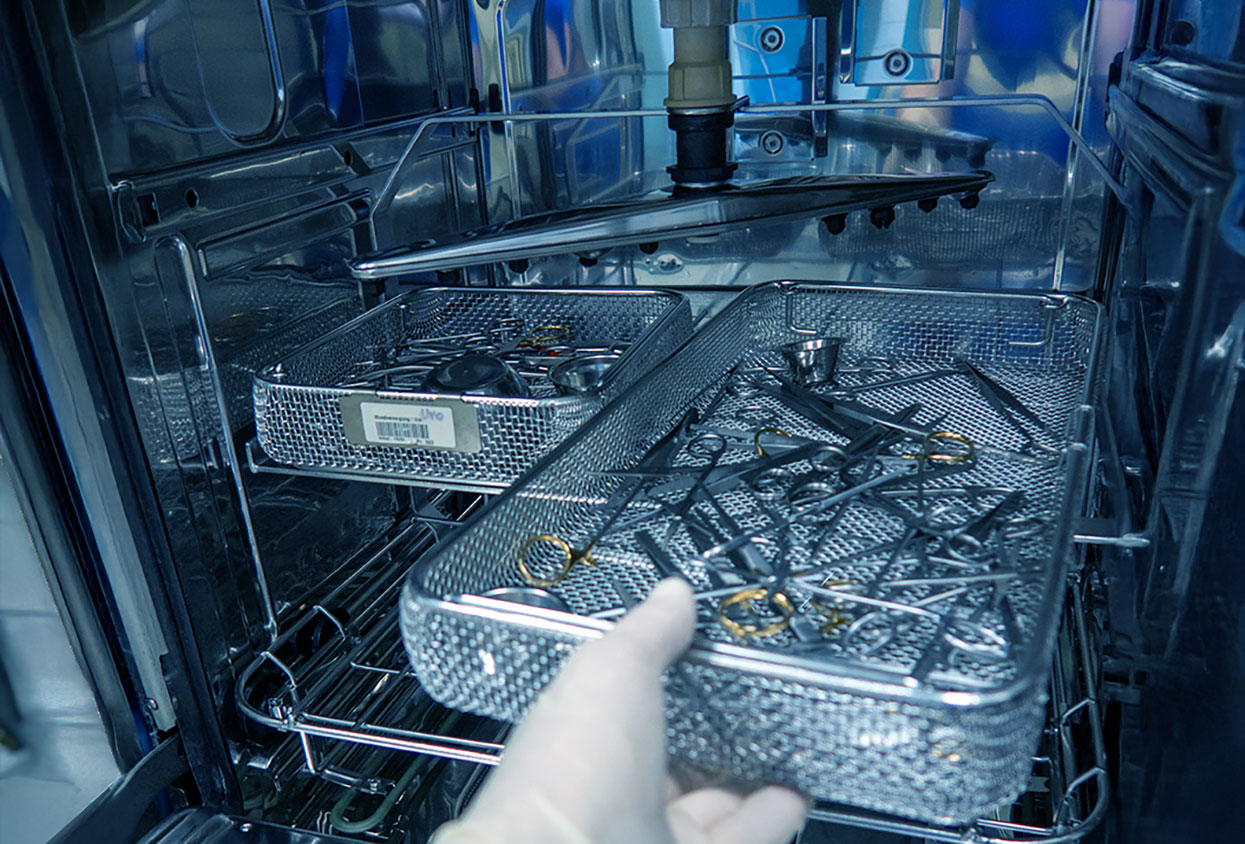
The Association for the Advancement of Medical Instrumentation (AAMI) defines IUSS as the process for sterilizing patient care items for immediate use, on an as-needed basis, when a designated instrument becomes contaminated or a sterile replacement is not otherwise available 1. Used correctly, it is a legitimate way to rescue a case rather than cancel it.
The Centers for Disease Control and Prevention (CDC), The Joint Commission, and the Association of periOperative Registered Nurses (AORN) all draw the same line: IUSS belongs in emergent situations, and none of them sanction it as a workaround for inadequate instrument inventory 1. It should never be used for implantable hardware.
The problem is that IUSS is convenient in exactly the situations where it should not be used. It is faster than a full cycle, and to a scrub tech facing a missing tray with a patient already asleep, it looks like the responsible choice.
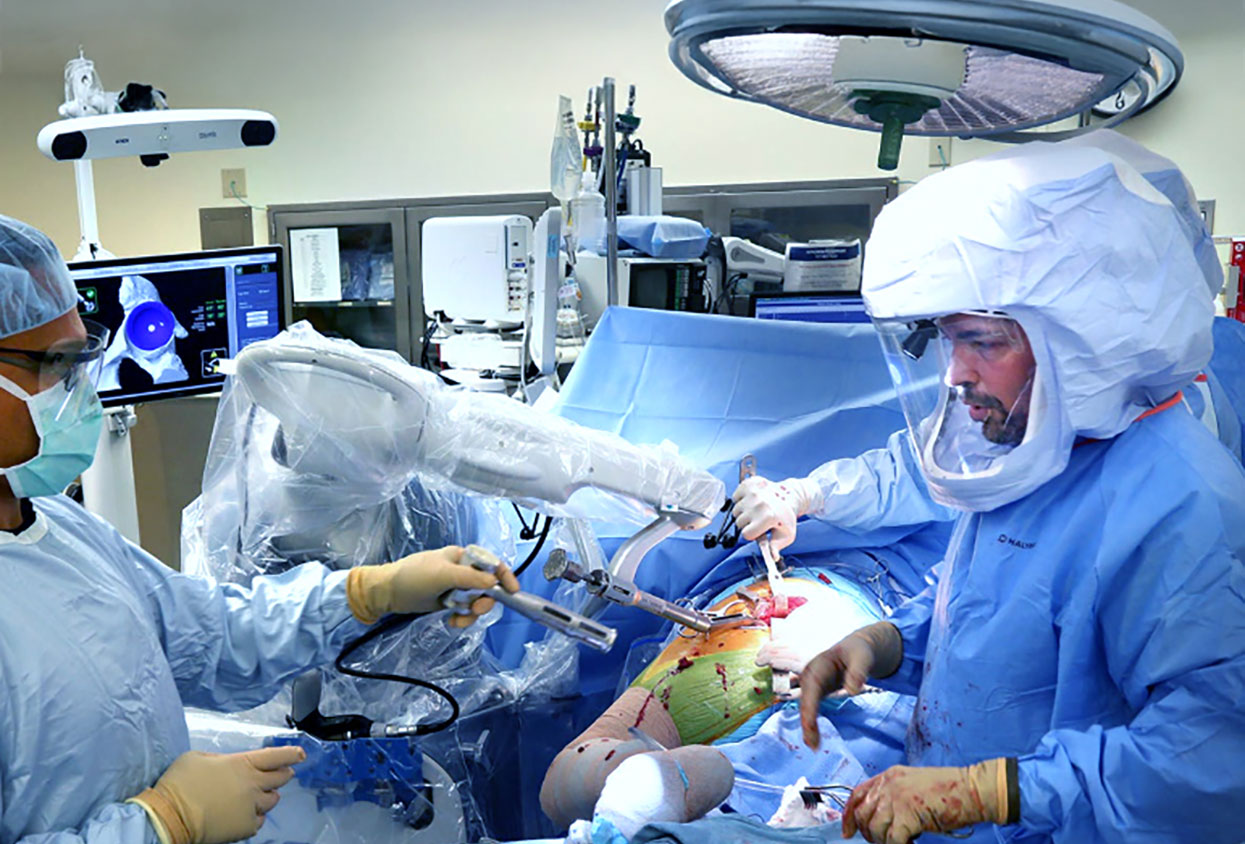
The Vanderbilt study compared 104 elective hip and knee arthroplasty procedures in which IUSS occurred against 81 in which it did not, all performed in the hospital's main orthopedic operating suites during 2008 1. Across those 104 procedures, IUSS was used 168 times, an average of 1.6 events per case. That is a recurring feature of the workflow, not a rare rescue.
Only 9.5 percent of those events met the accepted indication, intraoperative contamination. The rest were instruments received unsterile from central processing (45.2 percent), OR turnover pressure (37.5 percent), one-of-a-kind instruments with no backup (3.0 percent), and no documented rationale (4.8 percent). In total, 85.7 percent of events occurred for reasons the authors describe as incongruent with recommended guidelines.
This was not unique to one hospital. The same paper cites an earlier evaluation at another institution, where 77.7 percent of IUSS events traced back to an instrument from a previous procedure not being available for the next one, with smaller shares attributed to dropped items (8.3 percent), torn wrappers (3.3 percent), and chemical indicator failures (0.8 percent) 2. Different hospitals, same story: IUSS was functioning as an inventory workaround, not an emergency response.
A multivariate analysis identified four statistically significant predictors of IUSS use: a patient history of malignancy (odds ratio 3.2), obesity (2.3), one specific operating room suite (2.5), and procedures falling on a Monday (3.6) 1. Morning procedures worked in the opposite direction, with a protective odds ratio of 0.4.
None of these are clinical indications for IUSS. They are operational and scheduling patterns. Stratified by joint type, obesity (odds ratio 4.3) and Monday scheduling (4.5) remained significant for knee arthroplasty, while for hip arthroplasty the operating room location became a far stronger predictor, with an odds ratio of 26.1.
The Monday effect suggests backlogs built up over a reduced-staff weekend carry directly into Monday's cases. The morning effect tells the same story in reverse: as rooms draw on the same finite inventory through the day, the odds of running short climb. This is a capacity problem showing up as a sterilization statistic.
The researchers also checked each IUSS event against seven documentation elements recommended by national sterilization standards: rationale for use, cycle time, peak temperature, peak pressure, biological indicator use, chemical indicator use, and a legible description of the instruments 1. Compliance was inconsistent across all seven.
Chemical indicator use went undocumented in 6.0 percent of events and biological indicator use in 4.8 percent. The rationale was missing or incomplete in roughly one in twenty events, and instrument descriptions were missing or illegible in 14.9 percent. A biological indicator is the accepted method for confirming a cycle achieved lethality against resistant microorganisms, and if one later comes back positive, every item sterilized since the last negative result is subject to recall. Without complete records, there is no way to confirm a load was properly sterilized.
Instruments arriving unsterile from central processing and OR turnover pressure together account for more than four out of five IUSS events. Both point to the same condition: not enough complete, ready instrument sets to cover actual case volume.
This is not a story about careless staff. Sterile processing departments are asked to turn more trays, faster, with the same headcount and finite inventory. When a tray is not ready and a patient is on the table, IUSS becomes the pressure valve.
Guidelines restrict IUSS to emergencies because it bypasses some of the redundancy built into a standard sterilization cycle, and the pressure of an urgent, mid-case need increases the odds of a skipped step. The CDC, The Joint Commission, AORN, and AAMI all discourage IUSS as an inventory substitute for exactly this reason 1.
Documentation gaps add a second layer of exposure. Incomplete IUSS logs complicate infection investigations, weaken quality assurance reporting, and are discoverable in litigation. Each IUSS event is also a delay, moved from pre-case planning into the middle of an active surgery.
The fix for inappropriate IUSS use does not live at the sterilizer. It lives upstream, in whether a complete instrument set is ready before every case begins. The Vanderbilt researchers proposed an indication checklist, but acknowledged that documentation improvement alone does not address the underlying rate of IUSS use.
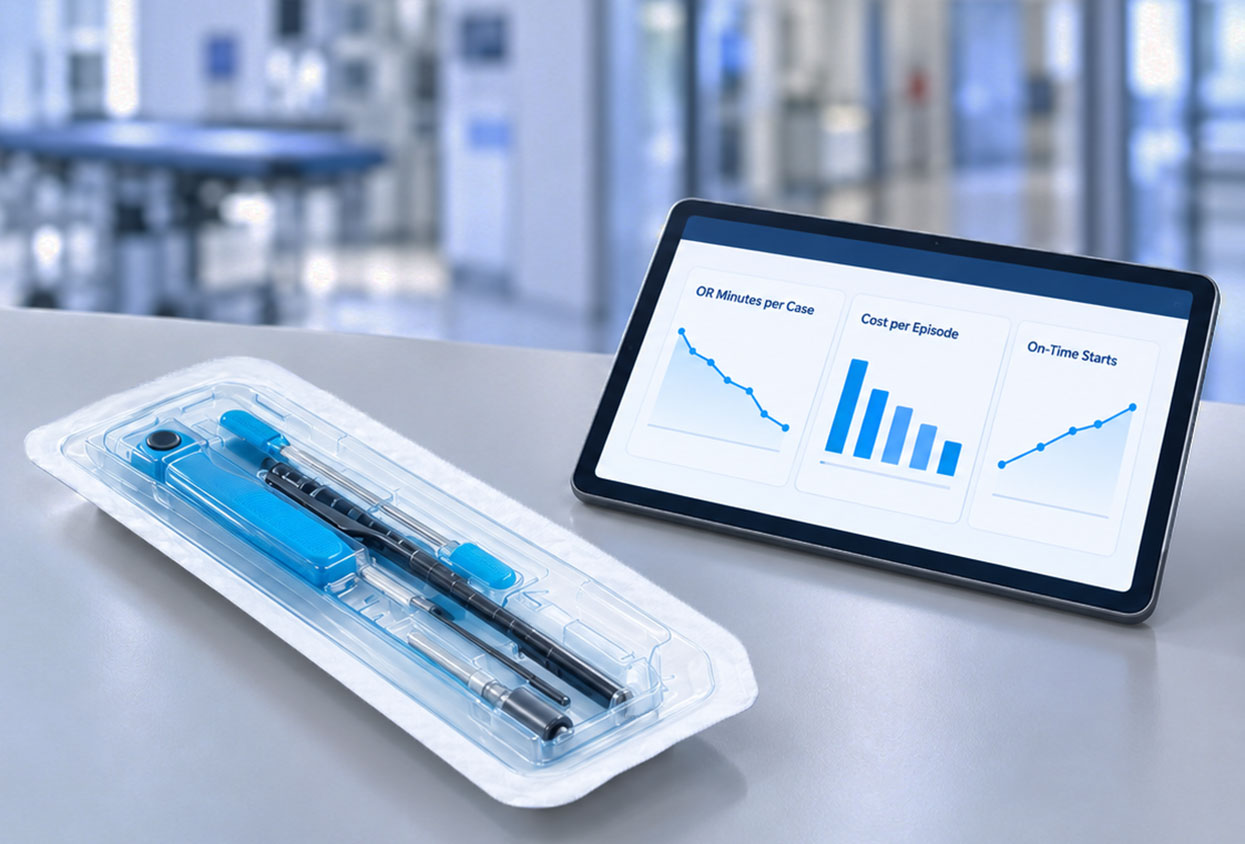
This is where complete, sterile-packed, single-use procedure kits change the equation. When every instrument a case requires arrives in one validated, ready-to-open kit, there is no late tray from central processing and no shared inventory to run short across simultaneous rooms.
The research does not suggest that IUSS itself is unsafe. Used as intended, as a rare response to genuine intraoperative contamination, it remains a legitimate part of sterile processing. But in real-world orthopedic ORs, it is overwhelmingly functioning as a routine fix for instrument shortages and turnover pressure, in roughly six of every seven documented events.
Better documentation and checklists can catch individual instances of misuse. Only closing the instrument-availability gap removes the reason they keep happening. For OR directors and sterile processing managers, that makes instrument supply the place to start.
ECA Medical works with implant OEMs and surgical teams as a Surgery-Ready™ solutions partner, building complete, sterile-packed, single-use procedure kits for orthopedic and spine cases. Because every instrument arrives together in one validated kit, there is no shared central-processing inventory to run short, the gap the research links directly to inappropriate IUSS use.
If your facility is using IUSS as a routine workaround, that is usually an instrument-supply problem, not a discipline problem. It is worth solving upstream.
Q: Is IUSS the same thing as flash sterilization?
A: Yes. IUSS is the current term for what was historically called flash sterilization.
Q: When is IUSS actually appropriate to use?
A: Guidelines restrict it to emergencies, most commonly when an instrument is contaminated intraoperatively and no sterile replacement is available. It should never be used for implants or as a substitute for adequate inventory.
Q: Does IUSS increase the risk of surgical site infection?
A: IUSS bypasses some of the redundancy of a standard cycle, and mid-case urgency increases the odds of a skipped step. That is why the CDC, The Joint Commission, and AORN limit it to genuine emergencies.
Q: Why do hospitals use IUSS so often if it is discouraged?
A: Research auditing real arthroplasty cases found that instruments arriving unsterile and OR turnover pressure accounted for more than 80 percent of IUSS events. That points to an instrument-supply problem, not a training problem.
Q: Can single-use instrument kits reduce reliance on IUSS?
A: Yes. Complete, sterile-packed kits remove the shared-inventory shortages that research links to most inappropriate IUSS use.
1. Zuckerman SL, Parikh R, Moore DC, Talbot TR. An evaluation of immediate-use steam sterilization practices in adult knee and hip arthroplasty procedures. American Journal of Infection Control. 2012;40(9):866-871. https://doi.org/10.1016/j.ajic.2011.11.006
2. Leonard Y, Speroni KG, Atherton M, Corriher J. Evaluating use of flash sterilization in the OR with regard to postoperative infections. AORN Journal. 2006;83(3):672-680. https://doi.org/10.1016/S0001-2092(06)60195-6