Modern operating rooms are under quiet but relentless pressure. And are expected to deliver consistent outcomes, maintain the highest standards of safety, and do so within environments that are increasingly constrained by time, staffing, and cost. Precision has always defined surgery, yet the systems surrounding it have not always evolved at the same pace. Variability still lingers in preparation, instrumentation, and readiness, often absorbed silently by surgical teams.
This is where surgery-ready™ instruments matter most. Their ascendency is not the result of a passing operational trend. It reflects a deeper shift toward reliability as a core value in modern surgical care. We are witnessing a move away from systems that rely on “close enough” and toward systems designed to behave predictably. This distinction is foundational.
In this article, we explore why surgery-ready™ instruments are becoming the standard in modern operating rooms. We examine the clinical, operational, and economic forces behind this shift, and why it represents an evolution in how surgical systems are designed rather than a shortcut in how surgery is performed. Throughout, we return to the idea of the surgeon as a surgical artist, because surgery is not merely a technical execution. It is a practiced craft, supported or undermined by the systems that surround it.
Operating rooms today are expected to function with near-perfect consistency, even as resources tighten. Case volumes rise. Turnover expectations increase. Staffing models are stretched thinner. At the same time, tolerance for error rightly continues to narrow. These pressures expose the limits of systems built on variability.
Historically, operating rooms relied heavily on skilled individuals to bridge gaps in preparation and instrumentation. Teams adapted. They compensated. They made it work. But adaptation carries a cost. It consumes attention, increases cognitive load, and introduces subtle risk.
Surgery-ready™ instruments represent a response and solution to these realities. They address efficiency, safety, and standardization at the system level. Their growing adoption reflects recognition that reliability cannot depend solely on people. It must be designed into the tools and workflows themselves.
This shift is not about reducing clinical rigor. It is about removing avoidable uncertainty. When readiness is engineered rather than improvised, the operating room becomes calmer, more predictable, and better aligned with modern expectations of care.
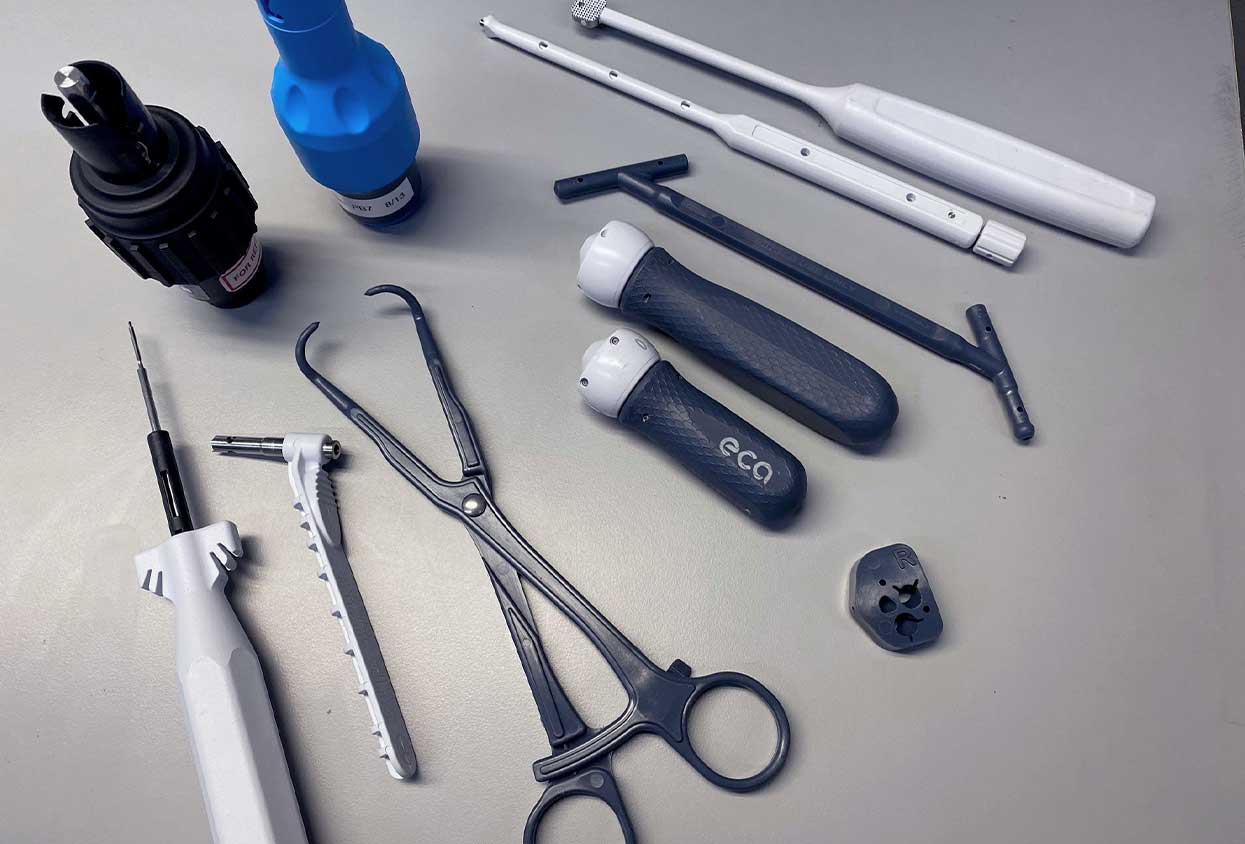
Surgery-ready™ instruments are single-use, sterile tools designed to arrive fully prepared for immediate use at the point of care. Unlike traditionally reprocessed instruments, they do not rely on multi-step cleaning, inspection, assembly, and sterilization cycles before each procedure.
Their defining characteristics are procedural readiness and sterility assurance. They are configured for specific surgical applications, validated for performance, and packaged to support direct integration into standardized workflows. When opened, they are ready. There is no additional preparation, no assembly uncertainty, and no dependency on upstream processing conditions.
In modern operating rooms, readiness at the point of use matters deeply. Delays, substitutions, or last-minute adjustments interrupt flow and increase risk. Surgery-ready™ instruments remove these variables by ensuring that what is required for the procedure is present, consistent, and reliable every time.
For the surgical artist, this readiness creates a stable foundation. Technique can unfold without distraction. Focus remains where it belongs.
Surgical techniques have advanced rapidly. Procedures are more precise, less invasive, and increasingly dependent on tight mechanical tolerances. As complexity increases, the margin for inconsistency shrinks.
Instruments that perform slightly differently from case to case introduce uncertainty during technically demanding moments. Reprocessed tools may vary in feel, calibration, or responsiveness. These differences may be subtle, but in high-precision environments, subtlety matters.
Surgery-ready™ instruments respond to this complexity by delivering consistent performance at every use. Because each instrument is new, validated, and purpose-built, performance does not degrade over time. There is no cumulative wear, no variability introduced through repeated handling.
This reliability reduces uncertainty during complex procedures. It allows surgeons to trust the tool implicitly. For the surgical artist, trust in instrumentation is inseparable from confidence in execution.
Traditional instrument reprocessing introduces variability at multiple points. Cleaning effectiveness can vary. Assembly accuracy can differ. Inspection standards may shift between facilities or staff. Even with best practices, inconsistency is difficult to eliminate.
Surgery-ready™ instruments deliver consistent performance regardless of location, staff, or facility. The same instrument behaves the same way in every operating room. This predictability simplifies collaboration across teams and reduces the need for procedural recalibration.
When instrumentation is consistent, communication becomes smoother. Surgeons, nurses, and technicians share expectations. Workflow becomes shared knowledge rather than personal adaptation.
Reduced variability strengthens trust across teams. It allows the surgical artist to move between environments without losing rhythm or confidence.
Efficiency in surgery is often misunderstood as speed. In reality, it is about flow. Surgery-ready™ instruments support efficiency by removing preparation steps that add time without adding value.
Eliminating reprocessing steps reduces setup complexity. Staff are freed from manual assembly and inspection tasks, allowing them to focus on patient care and intraoperative support. Preparation becomes simpler, not faster.
Consistent readiness improves case turnover by stabilizing preoperative workflows. There is less troubleshooting, fewer delays, and fewer last-minute substitutions. Importantly, this efficiency does not come from rushing teams. It comes from designing systems that behave predictably.
Sterility assurance is foundational to patient safety. Traditional reprocessing cycles, while effective, introduce multiple points of exposure. Handling, transport, and repeated use increase vulnerability to contamination.
Surgery-ready™ instruments, designed for single use, reduce these risks by minimizing handling and eliminating reuse. Each instrument enters the sterile field for the first time at the moment of use.
This approach supports stricter infection prevention protocols and reduces reliance on complex reprocessing infrastructure. Sterility becomes a property of the system rather than a variable to be managed.
When sterility is reliable, confidence increases. Patients are safer. Teams are calmer. The surgical artist operates within an environment that supports trust rather than vigilance.
Repeated reprocessing affects instrument integrity over time. Mechanical components can wear. Calibration can drift. Performance can subtly change.
Surgery-ready™ instruments provide consistent performance because each instrument is new. Torque-sensitive and precision-dependent procedures benefit particularly from this reliability. When performance is predictable, technique can be precise and repeatable.
Reliability matters not only for outcomes, but for confidence. Surgeons rely on instruments to respond exactly as expected. When that trust is earned consistently, focus remains uninterrupted.
Healthcare systems face ongoing staffing challenges. Turnover and shortages increase reliance on standardized systems that reduce training complexity and dependence on individual experience.
Surgery-ready™ instruments simplify onboarding by reducing variability. New staff encounter consistent tools and workflows. Cross-coverage becomes easier. Scheduling becomes more flexible.
Predictable instrumentation supports workforce stability by reducing stress and uncertainty. Teams can function effectively even as staffing models change. Stability in tools compensates for the possibility of instability elsewhere.
Modern healthcare increasingly prioritizes measurable outcomes, transparency, and cost predictability. Surgery-ready™ instruments align naturally with these goals.
Standardized instrumentation supports predictable case costs and resource use. Reduced delays, fewer errors, and less rework contribute to value-based metrics. Efficiency gains emerge from system design rather than human acceleration.
This alignment supports long-term sustainability. As healthcare systems scale, standardized tools become essential infrastructure rather than optional enhancements.
Supply chain complexity disrupts surgical operations when variability is high. Forecasting becomes difficult. Inventory expands unnecessarily. Delays ripple into clinical care.
Surgery-ready™ instruments streamline procurement by standardizing usage patterns. Forecasting improves. Inventory planning stabilizes. Logistical complexity declines. Stable supply chains support uninterrupted surgical operations. When instruments arrive ready, the system breathes more easily.
The adoption of surgery-ready™ instruments is driven by cumulative benefit. Each advantage reinforces the next. Reliability supports efficiency. Efficiency supports safety. Safety supports confidence.
Early adoption has reshaped expectations. Readiness is no longer a luxury. It is becoming a foundational infrastructure in modern operating rooms.
Standardization enables scalability. As systems grow, variability becomes unsustainable. Surgery-ready™ instruments provide a path forward that preserves quality while supporting expansion.
Surgery-ready™ instruments address modern surgical challenges holistically. They reduce variability, enhance efficiency, and strengthen patient safety without compromising clinical rigor. They reflect smarter systems, not simpler surgery.
For the surgical artist, these instruments restore rhythm, trust, and focus. They allow craft to unfold within an environment designed for reliability.
As a long-standing leader in surgery-ready instrumentation and standardized surgical solutions, ECA Medical Instruments continues to support healthcare organizations seeking more predictable operating rooms. When readiness is designed into the system, surgery becomes not only more efficient, but more human, one procedure, one patient, one outcome at a time.