Operating rooms are designed for precision, yet daily reality often feels less controlled. Surgical teams move quickly between cases while sterile processing departments manage growing tray volumes and supply chain leaders work to maintain visibility across thousands of items. Everyone shares the same goal: safe, predictable procedures. Still, missing instruments, open trays, and last-minute substitutions continue to disrupt otherwise well-planned workflows.
These tensions rarely come from a single failure. More often, they stem from variability. Instruments assembled differently from case to case, inconsistent counts, reprocessing delays, or unexpected inventory gaps introduce friction that compounds across busy surgical schedules. Small inconsistencies become operational risks when case volume rises or staffing resources tighten.
This is where Sterile Instrument Kits offer practical value. Rather than adding new layers of complexity, properly designed kits help healthcare teams stabilize workflows, simplify inventory planning, and reinforce infection control practices through consistency. This article explores what these kits are, how they function within real hospital environments, what organizations should evaluate before adopting them, and how to implement them thoughtfully for long term scalability.
Healthcare environments depend on repeatability. When procedures follow predictable steps, teams work with confidence and fewer interruptions. However, instrument variability quietly challenges that consistency every day.
Mixed tray builds frequently occur when instruments are pulled from multiple locations or rebuilt under time pressure. Counts may differ between shifts, instrument conditions vary depending on reprocessing cycles, and substitutions are sometimes made simply to keep cases moving. Each adjustment introduces additional handling, verification, and uncertainty.
From an infection prevention perspective, variability increases touchpoints. Every additional assembly step, inspection, or correction creates another opportunity for process breakdown. While individual actions may appear minor, high case turnover amplifies these risks. Under demanding operating conditions, consistency is protection.
Sterile Instrument Kits help address this issue by aligning instruments with specific procedures before they reach the operating room. Instead of rebuilding setups repeatedly, teams begin with a predictable foundation that reduces unnecessary handling while supporting disciplined workflows.
Hospitals continuously pursue cleaner workflows, reliable compliance documentation, and dependable surgical readiness. Preconfigured sterile kits support these goals by simplifying how instruments move from preparation to point of use.
At their core, Sterile Instrument Kits are procedure-aligned collections of instruments and components that arrive sterile and ready for use. The concept is straightforward: fewer preparation steps lead to fewer handoffs and fewer opportunities for variation.
Rather than assembling instruments from multiple trays or storage locations, staff open a kit designed around the intended procedure. This approach does not replace established infection control programs. Instead, it reinforces them by making correct processes easier to repeat consistently.
Healthcare organizations already prioritize traceability, sterility assurance, and workflow reliability. When kits are integrated thoughtfully, they support these objectives without requiring staff to change familiar routines.
Sterile Instrument Kits typically include single-use surgical instruments, sterile barrier packaging, clear labeling, and procedure-specific configurations. The phrase procedure ready simply means that the instruments match the planned workflow rather than being gathered from numerous sources immediately before surgery.
Importantly, these kits are not one-size-fits-all solutions. Effective programs reflect surgeon technique, procedural requirements, and facility preferences. Customization and configuration control remain central to long-term success and are designed into the kits at ECA Medical.
Another common misconception is that kits bypass established sterilization or quality processes. In reality, they support process discipline by reducing variability and simplifying repeat execution. A scalable kit program differs significantly from convenience sterile packs because it connects inventory management, quality documentation, and operational planning into a unified system.
By approaching Sterile Instrument Kits as part of an operational strategy rather than a purchasing shortcut, healthcare systems gain meaningful stability.
Consider a typical surgical preparation challenge. Instruments must be gathered, reprocessed, inspected, assembled, wrapped, sterilized, transported, and verified again before use. Any interruption in this sequence may require rework or substitution.
Because ECA Medical’s Sterile Instrument kits arrive assembled and sterile, unnecessary handling steps can be decreased, limiting opportunities for contamination risk introduced through repeated manipulation.
The benefit lies not in guaranteed clinical outcomes but in workflow discipline. Consistency supports safer practices.
Confidence in sterile kits depends heavily on documentation and traceability. Clear labeling, lot tracking, and accessible records allow teams to verify product history quickly. During audits or internal reviews, traceability simplifies investigations and supports continuous improvement initiatives.
Facilities evaluating Sterile Instrument Kits should expect transparent information regarding instructions for use, sterilization validation where applicable, packaging integrity standards, and structured change control practices. These elements provide operational assurance that extends beyond convenience.
Inventory complexity often grows gradually. Individual instruments accumulate across departments, backup supplies multiply, and purchasing decisions become reactive rather than planned.
When supplies exist in many small units, forecasting becomes difficult. Overstocking occurs as teams order extra materials to avoid shortages, while unused items quietly expire across storage areas. The result is both financial waste, increased staff overview and operational uncertainty.
Sterile Instrument Kits change this equation by consolidating multiple components into a single unit. Instead of tracking numerous individual stock-keeping units, facilities align inventory planning with procedure volume.
Consumption becomes easier to predict because kit usage corresponds directly to scheduled cases. Reorder signals grow clearer, partial openings decrease, and unexplained inventory discrepancies become less common.
The visual difference is also striking. A cluttered surgical cart filled with individually packaged items demands constant decision-making. In contrast, opening a consistent kit creates a composed, orderly setup based upon specific procedures that reduces cognitive load during high-pressure moments. This visual clarity translates into calmer execution.
A shared understanding across procurement teams, sterile processing departments, and surgical staff is essential for successful adoption.
Operational improvements often emerge when workflows align across departments rather than optimizing one area in isolation.
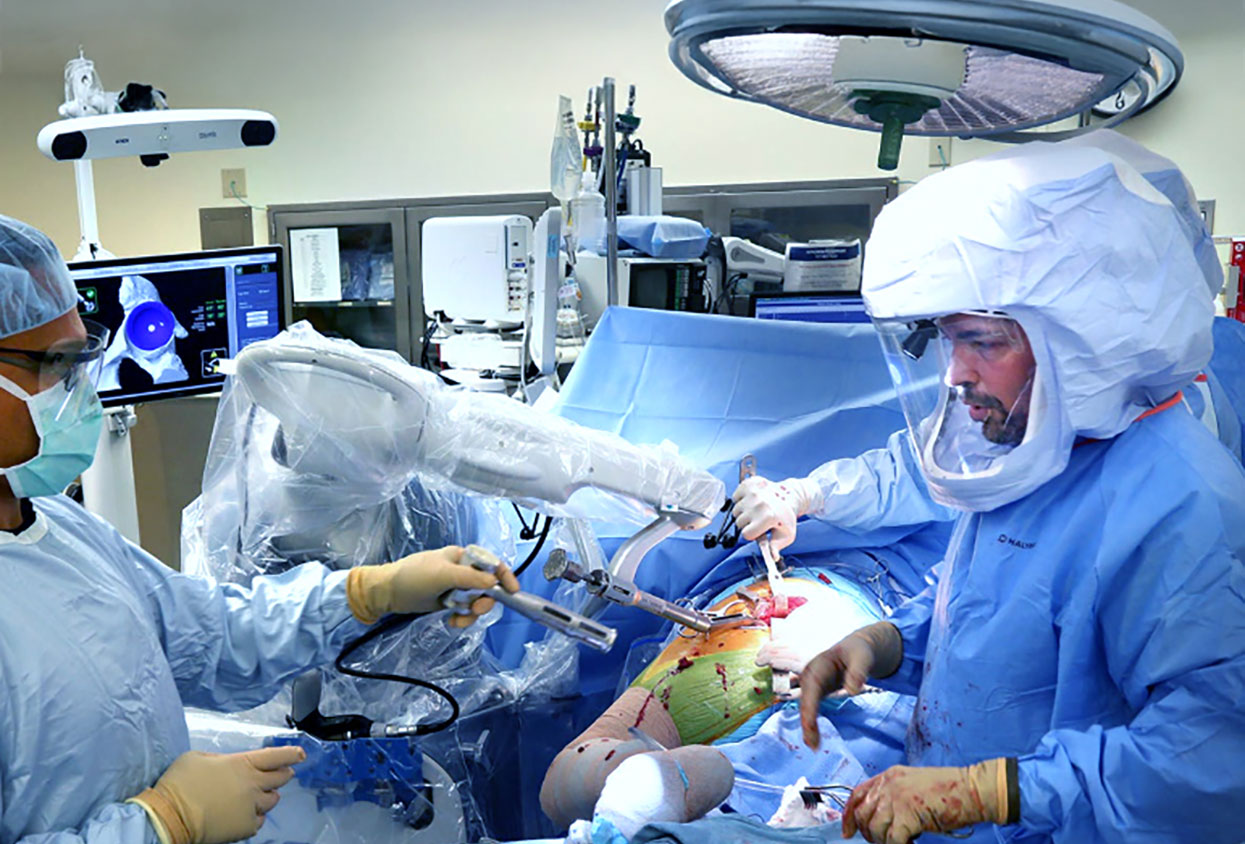
Within the operating room, a predictable setup supports smoother preparation and fewer last-minute searches for missing instruments. While time savings vary by facility, teams frequently experience more consistent readiness when procedures begin with standardized configurations.
For sterile processing departments, reduced tray complexity can ease assembly workloads and lower reprocessing demand for certain instrument categories. This allows SPD teams to focus attention where reusable instrumentation remains essential.
Supply chain leaders benefit from clearer purchasing signals. The one kit per case model simplifies par level planning and vendor coordination while supporting service line growth. As procedural volume expands, scaling becomes more manageable when supply systems remain repeatable.
In these environments, Sterile Instrument Kits function as operational connectors, aligning clinical needs with logistical planning.
Certain service lines naturally benefit from standardized procedural instrumentation. Orthopedic trauma, extremities, sports medicine, joint reconstruction, and spine implant fixation frequently involve repeatable workflows with defined instrument requirements.
In these settings, on-time case readiness carries significant importance. Consistent instrumentation helps teams maintain reliability while managing demanding surgical schedules.
However, not every procedure fits perfectly into a standardized model. Highly variable cases or frequent surgeon preference changes may require hybrid approaches. Facilities often implement core kits covering standard needs while maintaining supplemental instruments for specialized situations.
The flexibility to adapt configurations ensures that Sterile Instrument Kits enhance clinical practice rather than restrict it.
Successful adoption begins with careful evaluation. Clinical alignment remains essential, as surgeon acceptance depends on ergonomics, familiarity, and technique compatibility.
Equally important are supplier quality systems. Healthcare organizations should examine traceability processes, validation documentation, configuration control methods, and change management practices to ensure long term consistency.
Logistics also influence performance. Reliable availability, manageable storage footprint, dependable distribution networks, and predictable lead times all contribute to program stability.
Customization capability plays a defining role in scalability. Facilities benefit from partners such as ECA Medical that are capable of moving efficiently from concept to fulfillment while maintaining strict configuration control as feedback evolves.
Decision makers often ask how revisions are handled, whether suppliers can support growing volumes globally, and how instrumentation precision requirements, such as torque limiting performance, are validated. These discussions help determine whether a provider can sustain expansion over time.
Thoughtful implementation typically begins with a focused pilot program. Organizations select a single procedure with consistent demand, align stakeholders across OR, SPD, infection prevention, and supply chain teams, and define the kit configuration collaboratively.
Training ensures staff understand workflow adjustments before evaluation begins. During the pilot phase, teams observe performance under real operating conditions rather than theoretical assumptions.
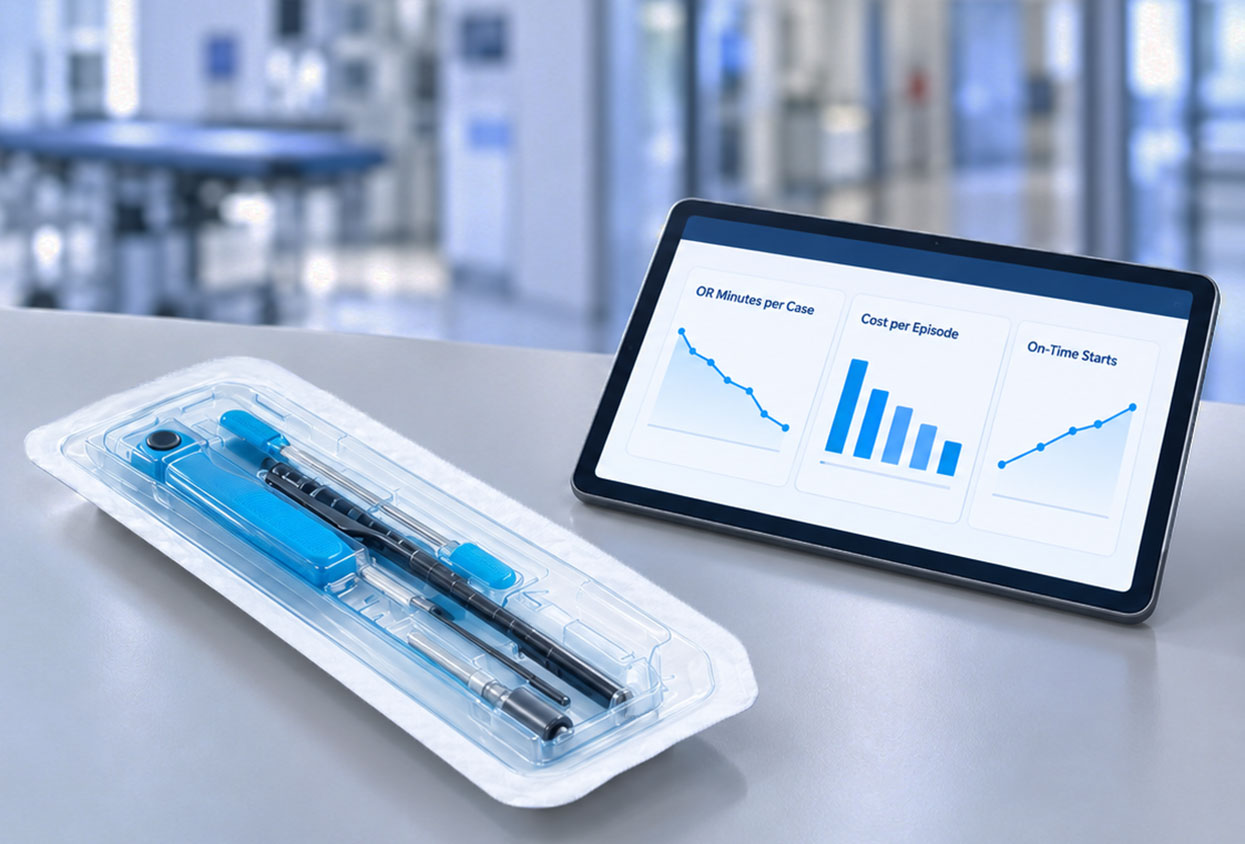
Key performance indicators remain straightforward. Facilities commonly monitor missing instruments, procedure delays linked to setup issues, urgent substitutions, open and unused waste, expired inventory levels, and staff time spent assembling or searching for equipment. Compliance indicators such as documentation completeness and audit readiness also provide valuable insight.
Common implementation mistakes include overlooking surgeon preferences, treating kits purely as supply purchases without critical workflow alignment, or scaling too quickly before performance data stabilizes. Clear ownership for configuration management helps prevent drift as programs expand.
When pilot outcomes demonstrate reliability, Sterile Instrument Kits can scale confidently across additional service lines.
Healthcare environments rarely slow down. Surgical teams must balance speed with safety while managing growing procedural demand. Thoughtfully implemented Sterile Instrument Kits help reduce variability, support infection prevention workflows, and simplify inventory planning without introducing unnecessary disruption.
The true value lies in consistency. A clean, repeatable setup creates confidence across teams, from sterile processing technicians to surgeons preparing for complex procedures. Predictability replaces improvisation, allowing staff to focus on patient care rather than logistics.
Organizations exploring scalable solutions can connect with ECA Medical, whose Surgery Ready, Made Easy™ philosophy reflects decades of collaboration with OEM implant leaders and healthcare providers worldwide. With more than 47 years of experience and millions of instruments deployed globally, ECA Medical continues to develop new procedure-specific kits designed to meet evolving clinical needs.
If a required configuration is not yet available, facilities work directly with ECA Medical to design and pilot a tailored solution. As surgical environments continue to evolve, standardized readiness supported by carefully designed Sterile Instrument Kits offers a practical path toward cleaner workflows, stronger inventory control, and dependable operational performance.
Are Sterile Instrument Kits compatible with existing OR workflows?
Yes. When designed collaboratively, kits align with established surgical routines and surgeon preferences rather than replacing them.
How do kits support infection control without adding steps?
They reduce handling and assembly variability by arriving sterile and consistently configured, reinforcing existing protocols.
Will kits reduce tray processing needs?
In many cases, certain reusable trays may be reduced or simplified, easing SPD workload where appropriate.
How does traceability work during audits?
Clear labeling and lot tracking allow facilities to document instrument usage quickly and accurately.
What is the best way to pilot adoption?
Start with one procedure, define measurable outcomes, align departments early, and expand only after consistent results are achieved.
Since 1979, the company has designed and delivered over 55 million single-use instruments and nearly 500,000 single use, sterile-packed and surgery-ready™ procedural kits to our medical device and implant customers. Contact us today for more information.