The orthopedic surgery landscape is in a constant state of flux. Procedures that once required overnight hospital stays now regularly happen in Ambulatory Surgical Centers before noon, with patients on their way home the same afternoon. That shift has been good for patients, good for costs, and good for the overall efficiency of care delivery. But it has put significant strain on one part of the orthopedic surgical model that has not changed nearly as fast: the instrument management system.
Single-use procedural kits are gaining ground in orthopedics, not because they are a newer option, but because the reusable instrument model was designed for a world that is fading out of existence, and the gap between what that model can deliver and what modern outpatient surgery demands is now too wide to ignore.
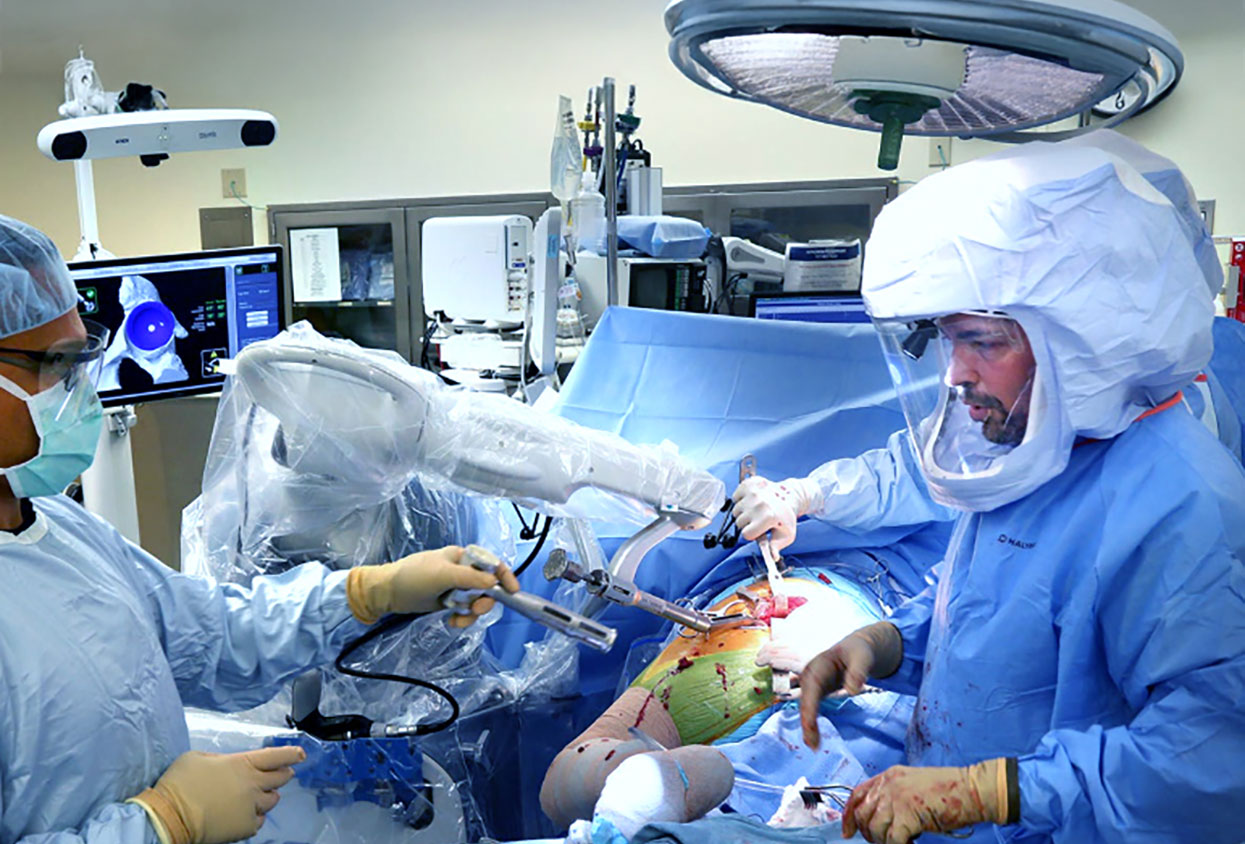
The migration of orthopedic procedures into ambulatory settings has exposed a fundamental mismatch. Reusable instrument systems were designed for large hospital environments with dedicated sterile processing departments, deep instrument inventories, and flexible scheduling that could absorb reprocessing delays. An ASC has none of those resources. ASCs run on lean staffing, limited storage space, minimal sterile processing capacity, and tight case turnaround windows. The expectation is that instruments arrive ready, cases flow on schedule, and the OR runs efficiently from first case to last every day.
Single-use Surgery-Ready procedural kits are designed for exactly this ambulatory setting. The kits and instruments arrive sterile, procedure-specific, and pre-configured. They do not require processing infrastructure, instrument inspection, or sterilization cycles between cases. They are surgery-ready from the moment they are opened.
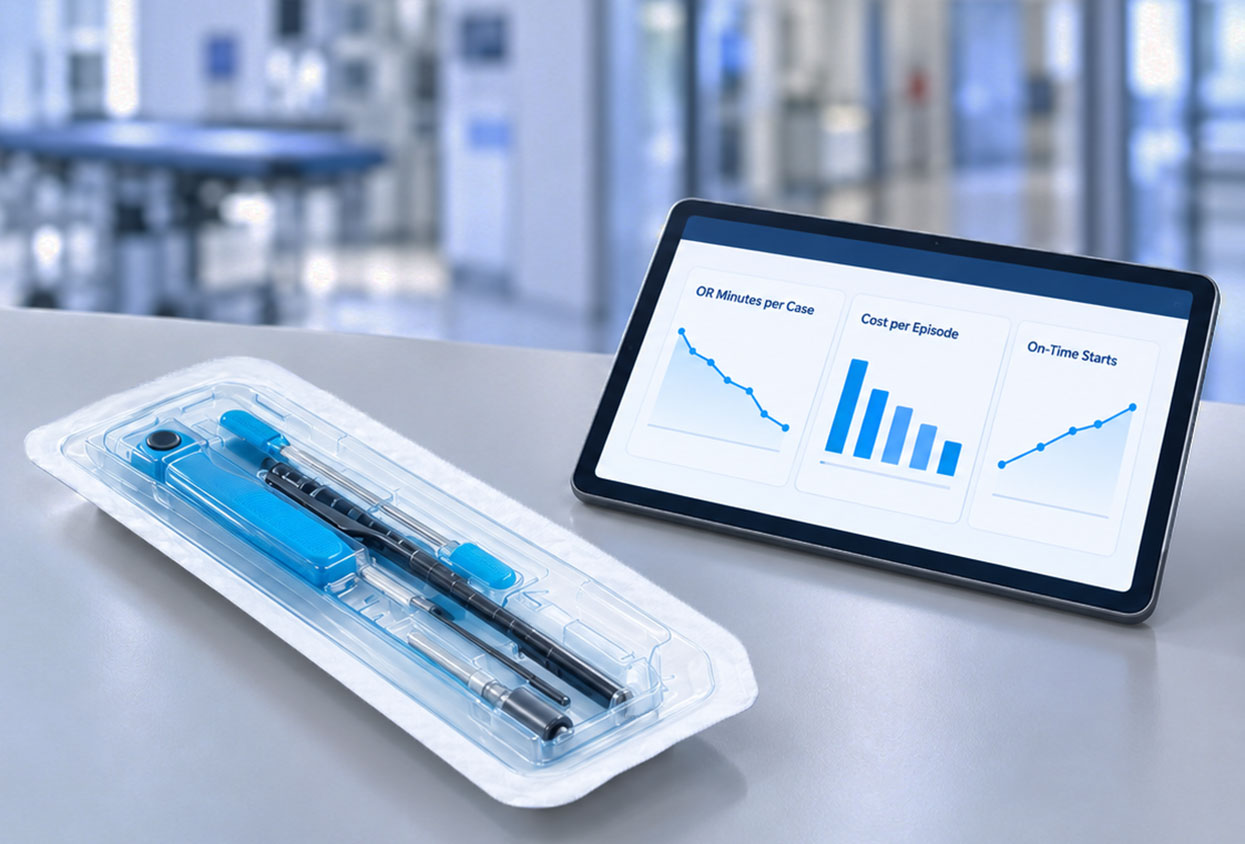
That difference matters when turnover pressure is high. In a peer-reviewed total knee arthroplasty model, traditional reusable systems required an average of 8 trays per case versus 1 tray with the single-use setup, and the model estimated 17.5 minutes of OR turnover time savings per case with single-use instrumentation.[1] For outpatient orthopedic environments trying to protect schedule integrity, that is not a minor operational improvement. It is a different delivery model.
One of the most persistent misunderstandings in the single-use conversation is that the cost comparison starts and ends with the instrument price. It does not. The real cost of a reusable orthopedic instrument system lives in everything surrounding the instrument as well, and in most facilities, those costs are poorly tracked and significantly underestimated.
Consider what reusable systems actually require: SPD labor to decontaminate, inspect, package, and sterilize instrument sets after every use; logistics infrastructure to move trays between the OR, the processing department, and storage; capital investment in sterilization equipment; ongoing repair and replacement of instruments that wear, break, or go missing; administrative time managing inventory, tracking tray contents, and documenting reprocessing cycles; and then the cost of OR delays and case cancellations when an instrument set is not ready or not complete.
Peer-reviewed modeling of single-use instrumentation in total knee arthroplasty found median total cost savings of $994 per case, with tray sterilization identified as the largest cost driver.[1] In the same study, single-use instrumentation reduced the median total cost per case from $1,391 to $406, and on 12-hour OR days, up to 51% of operating days could have accommodated an additional procedure because of turnover-related time savings.[1]
A separate value-based analysis in spine surgery reached a similar conclusion from a different angle. In that study, a terminally sterilized pedicle screw system saved an average of 21 minutes of OR time per case and generated average savings of €1,415 per case when tray sterilization was included.[2] When an implant OEM or ASC evaluates a kit program only at the unit-price level, those broader operating costs stay hidden.
The infection-prevention case for single-use kits should be made carefully, but it should still be made. The strongest argument is not that every reusable instrument is unsafe. It is that every reprocessing-dependent workflow introduces more steps, more handling, and more chances for variation.
That concern is supported in the literature. In one study of immediate-use steam sterilization in adult hip and knee arthroplasty, only 9.5% of immediate-use steam sterilization events involved an acceptable indication, meaning most occurred for reasons inconsistent with recommended guidance.[3] The same study found documentation gaps in key process controls, including missing documentation for biological indicators in 4.8% of events and chemical indicators in 6.0%.[3]
Additional literature reviewed in spine instrumentation found signs of contamination in at least one sampled region of every re-sterilizable instrument evaluated, with 56% showing severe contamination.[2] That same review also cited evidence that unused trays may still become contaminated after opening and that reprocessing performance can vary materially across facilities.[2] For orthopedic teams, that is the larger point: when sterility depends on perfect execution across multiple internal steps, consistency becomes harder to guarantee at scale.
For implant OEMs, the case for single-use Surgery-Ready procedural kits extends beyond operational convenience. It is a market positioning and scalability driver.
Implant companies that pair their systems with purpose-built, single-use instrument kits create a differentiated offering that goes beyond the implant itself. The kit becomes part of the product value proposition: a system that arrives surgery-ready, reduces the facility's reprocessing burden, supports consistent instrument performance across every case, and aligns with the outpatient surgical settings where the market has been moving and continues to do so.
The scalability implication is significant. An ASC that adopts single-use procedural kits from an OEM partner can increase case volume without proportionally increasing SPD capacity. That is consistent with the TKA modeling showing materially lower tray burden, lower tray-management time, and less overtime pressure with single-use instrumentation.[1] In practical terms, the OEM is not just supplying instruments. It is helping the customer remove a throughput bottleneck.
The economic and logistical arguments for single-use procedural kits are compelling to administrators and OEM executives. Surgeons respond to a different set of factors, and it is worth addressing those directly because surgeon adoption is what makes any instrument program sustainable.
Surgeons in high-volume orthopedic and spine practices care about flow, confidence, and consistency. They care about getting into the case without dealing with missing instruments, setup delays, or tray configurations that vary from one case to the next. They care about not having to ask the scrub tech whether a specific driver is in the set because it was not there last time.
Research in both arthroplasty and spine points in the same direction: fewer trays, less setup complexity, less reprocessing burden, and faster handling in the OR.[1][2] That does not just help administrators hit efficiency targets. It supports a more predictable surgical experience for the surgeon and the full OR team.
Single-use procedural kits are ideal for orthopedic surgery, not just because they offer improvement over reusable systems, but because the orthopedic market has moved to an environment where reusable systems no longer perform at the level the demand is setting. For OEMs building scalable surgical solutions and ASCs running high-volume outpatient caseloads, Surgery-Ready systems are an operating model for making orthopedic care more predictable, efficient, and easier to scale.
The facilities and companies that make this move earliest are not simply adopting a new instrument format. They are building a cleaner operational model around sterility assurance, throughput, and repeatable case execution.
ECA Medical develops Surgery-Ready single-use procedural kits purpose-built for orthopedic, trauma, and spine applications, from concept and custom configuration through sterile delivery. For implant OEMs that want to go to market faster and surgical facilities that want to run more predictably and keep up with demand, the value of a kit program is not just the instrument. It is the system around the instrument.
How are single-use procedural kits configured for specific orthopedic implant systems?
Kit configuration is a collaborative development process. The goal is to map implant system requirements, identify the instruments needed for each procedure, and configure kit layout and packaging accordingly so the finished kit aligns with the implant system it is meant to support.
What is the real cost comparison between single-use ortho kits and managing reusable instrument sets?
The comparison needs to account for the full cost of operating reusable systems: SPD labor, sterilization supplies, equipment maintenance, tray logistics, OR delays, and instrument repair and replacement. Peer-reviewed modeling in knee arthroplasty found median savings of $994 per case with single-use instrumentation, driven primarily by sterilization and tray-management savings rather than simple instrument price reduction.[1]
Can single-use procedural kits support high-volume orthopedic programs in ASC settings?
Yes. Because they do not require the same between-case SPD processing burden, they remove one of the biggest bottlenecks in high-turnover environments. The more constrained the facility is on sterile processing capacity, staffing, and storage, the stronger the operational case becomes.
How does moving to single-use instrumentation affect OR scheduling and daily case capacity?
Published modeling in TKA found that single-use instrumentation created enough turnover-related time savings for up to 51% of 12-hour operating days to accommodate an additional case.[1] A value-based spine analysis separately estimated average OR time savings of 21 minutes per case.[2]
What role do single-use kits play in the broader shift toward value-based orthopedic care?
Value-based care rewards efficiency, predictable outcomes, and cost discipline across the care episode. Single-use procedural kits support those goals by reducing operational variability, eliminating much of the reprocessing burden, and helping facilities run a more controlled and repeatable perioperative workflow.[1][2]