Surgery is rapidly shifting to outpatient settings, but the instrument models most implant OEMs rely on were designed for a different environment. Traditional reusable loaner systems assume access to hospital-based sterile processing infrastructure—something most ambulatory surgery centers (ASCs) lack the capacity or desire to manage.
As a result, OEMs are facing a more fundamental strategic shift. The question is no longer simply which instruments to provide, but how to deliver complete, surgery-ready solutions that enable consistency and scalability across a growing network of ASCs. This requires rethinking instruments as part of an integrated, single-use platform designed for efficiency, predictability, and ease of use in outpatient care settings.
Why the old instrument model strains at the ASC
Reusable loaner instrumentation is built on assumptions that simply do not hold in an ASC. It expects central sterile processing, trained reprocessing staff, and the operational slack to absorb a late or incomplete tray. ASCs run lean by design, making each of these assumptions difficult to sustain.
There is a strategic reason this matters now. Much of the healthcare system is shifting toward value-based care, where reimbursement rewards predictable cost, consistent outcomes, and efficient delivery. The reusable loaner model moves in the opposite direction, concentrating cost and variability in reprocessing and logistics that OEMs do not control and cannot standardize. Continuing to rely on that model introduces friction into a market that increasingly prioritizes predictability—while surgery-ready platforms are designed to align with it.
From product supplier to solutions platform
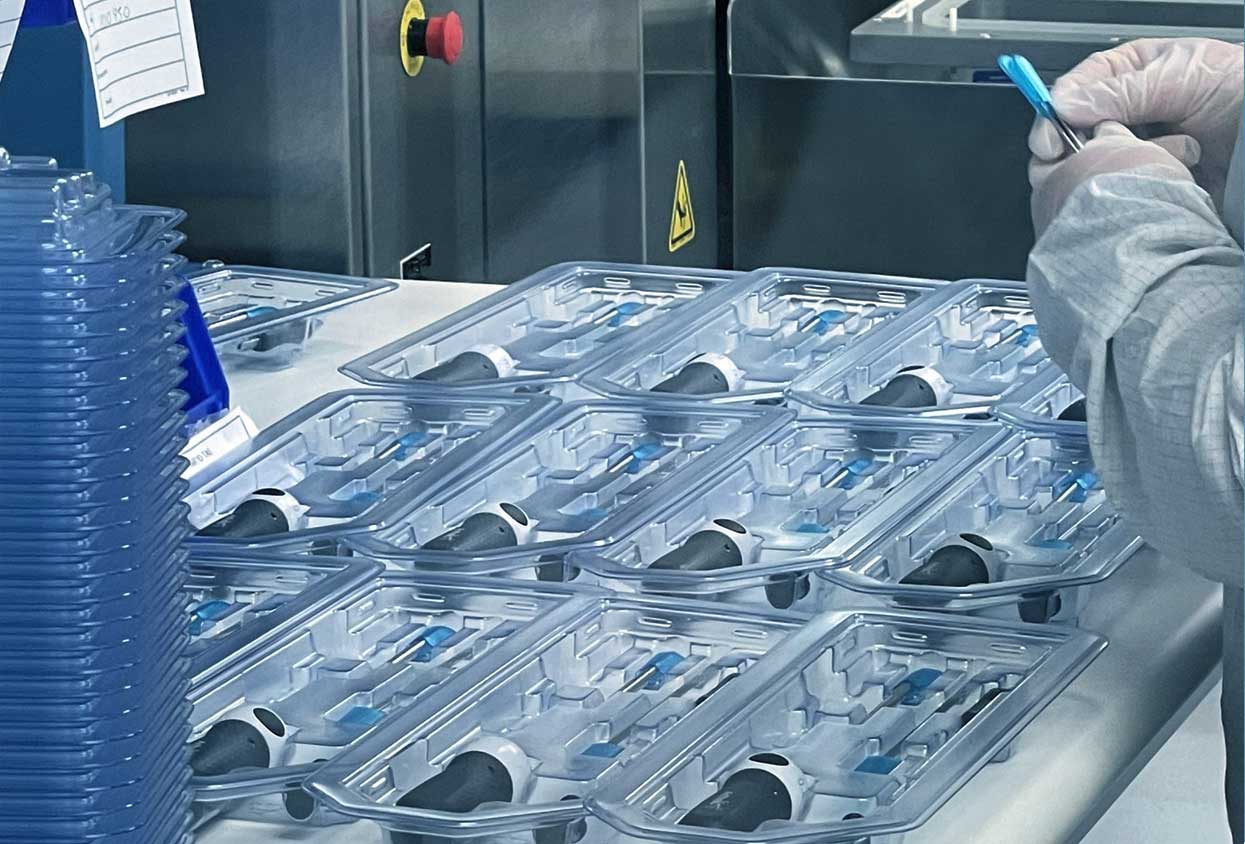
When an OEM designs and sells a single-use surgery-ready platform, they are not just selling instruments. Instead the OEM is selling predictable surgery, scalable growth, reduced operational friction, lower downstream liability, and a new value proposition for the hospitals and ASCs they serve. Single-use, sterile-packed instruments and kits simplify the procedural ecosystem, helping produce consistent outcomes across ASC sites, which they need to thrive.
This is where partnering on procedural kit development becomes strategic rather than transactional. The kit is the delivery vehicle, the platform is the value.
ASC migration is a strong tailwind
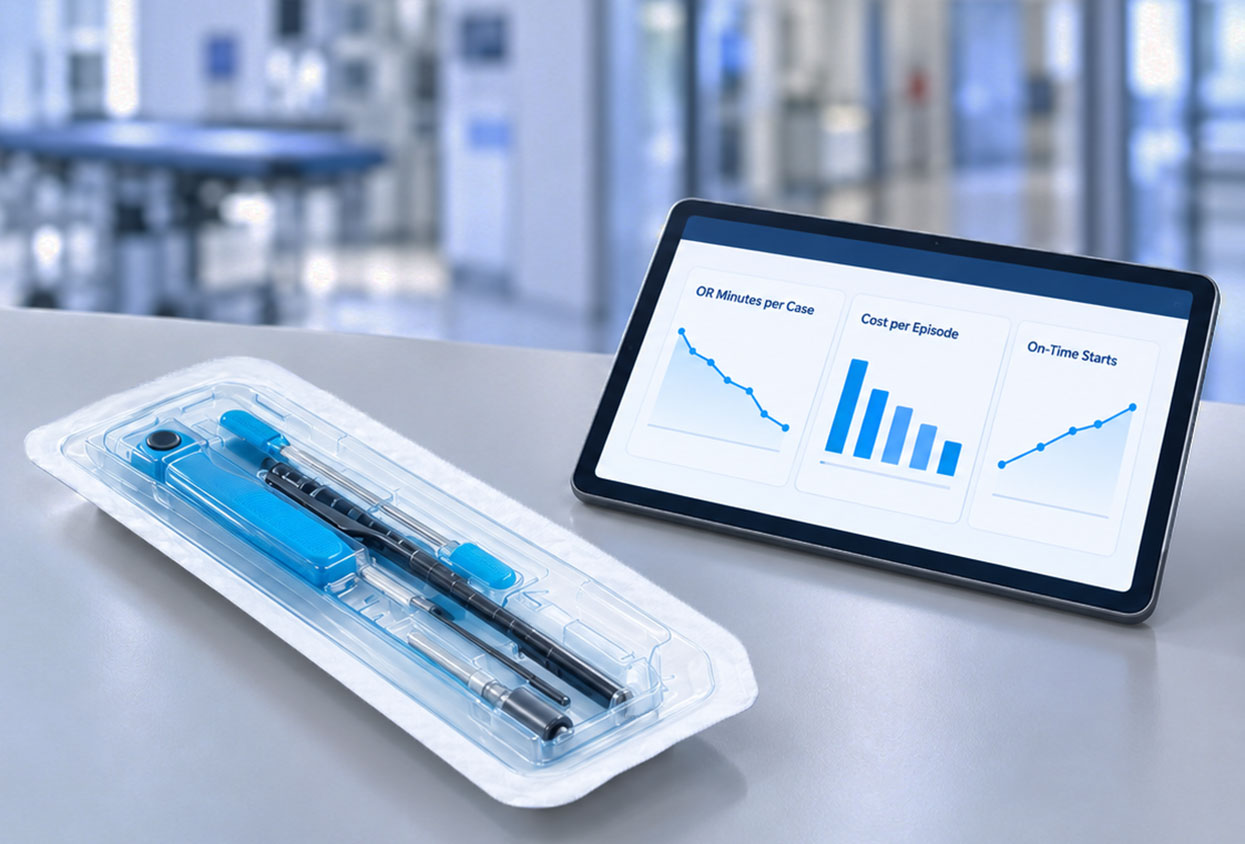
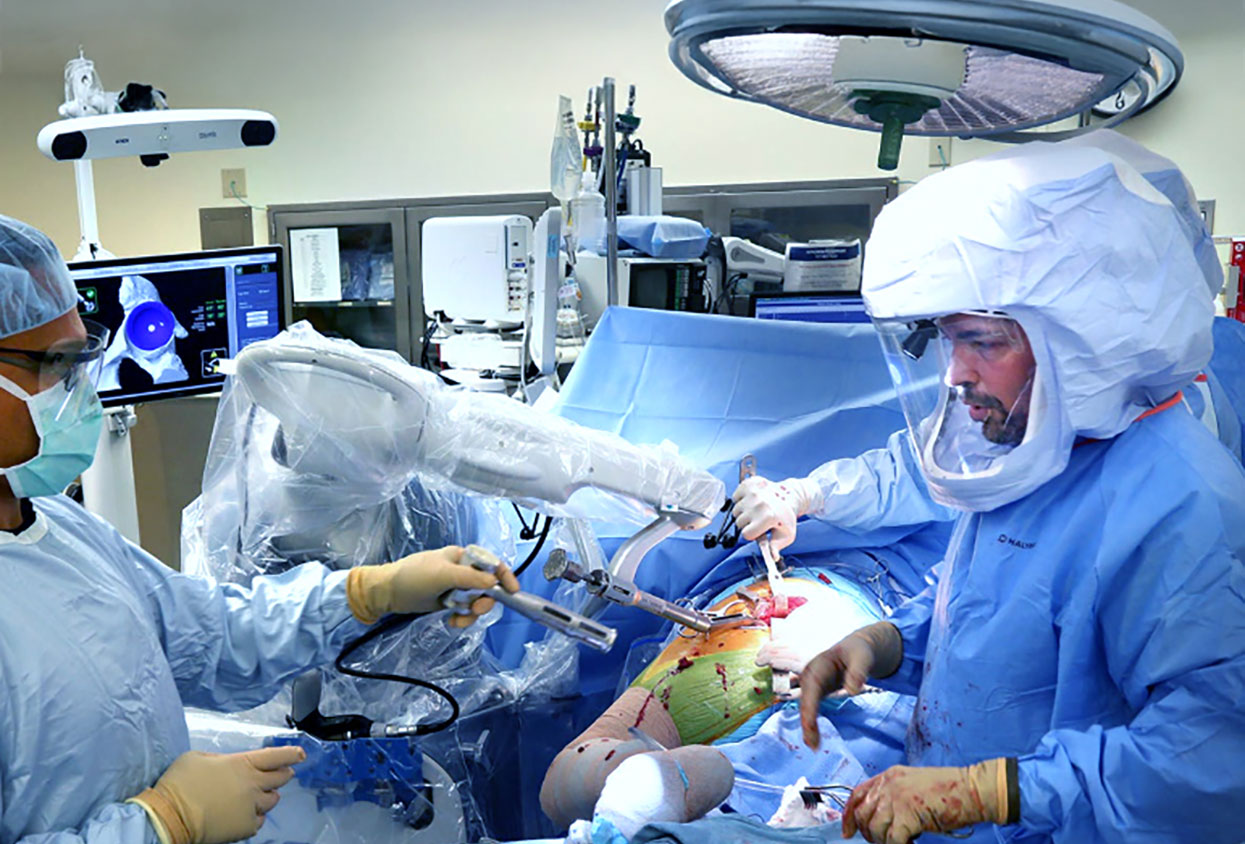
The steady migration of procedures, including total joints, into outpatient settings rewards exactly the attributes single-use surgery-ready systems are built around: reduced trays, faster turnover, lower staffing dependence, and added daily capacity. The economic case is documented. A total knee arthroplasty study found single-use instruments cut turnover time by roughly 17.5 minutes per case and could have freed up an additional case on up to 51 percent of operating days.1 For an OEM, that’s success; it is a scalable driver that makes single-use, surgery-ready platform more attractive to every site it’s placed in.
Building the platform advantage
The advantage comes from standardization. One system, deployed the same way across many ASCs, gives an OEM predictable rollout, predictable training, and predictable outcomes. A health technology assessment comparing disposable and reusable pedicle screw kits for lumbar arthrodesis found total cost was comparable between the two, while the disposable kit showed meaningful advantages in patient safety and organizational impact, including the elimination of pre- and post-operative sterilization time.2 A comparable cost with better organizational fit is the kind of finding that lets an OEM lead with value rather than price.
And the platform keeps compounding. Single-use systems open the door to serialized traceability, usage analytics, supply resilience, and the digital and operational layers that turn a kit into an enterprise capability. ECA Medical works with OEM’s to develop ortho, spine, cardiac, and neuro platforms that scale across the ASC landscape at scale.
The differentiation most OEMs are leaving on the table.
Implant competition is intense, and at the implant level, differentiation is often marginal. The instrumentation and delivery system surrounding the implant is where OEMs can still create meaningful separation, because it defines the customer’s day-to-day experience. Surgeons and ASC administrators do not experience manufacturing tolerances; they experience whether a system arrives complete, sterile, and ready—case after case. Own that experience, and you create a durable differentiator embedded in how you deliver, not just what you deliver.
This reframing also reduces downstream liability exposure, an issue that carries more strategic weight than it often receives. Reprocessing variability, contamination risk, and readiness failures are inherent to reusable models. A single-use, surgery-ready platform simplifies the sterility chain and removes entire categories of process-dependent risk from the field. For OEMs operating across hundreds of sites, reducing that variability at the system level is both a clinical and commercial advantage.
The areas still underdeveloped—supply chain resilience, labor simplification, and digital traceability—are where the next wave of value will emerge. OEMs that build these capabilities into a surgery-ready instrument platform now are positioning for a market that is moving toward outpatient care, lean staffing, and data-driven operations.
Conclusion
Implant OEMs use integrated surgery-ready solution platforms to scale predictable outpatient surgery by giving every ASC the same simplified, reliable system, so growth does not mean multiplying complexity. The instrument is replaceable. The platform, the standardization, predictability, and differentiated value it delivers are the things that competitors cannot easily copy. That is where the next decade of OEM advantage will be built.
ECA Medical: a surgery-ready™ platform partner for OEMs
ECA Medical is the number one choice of implant OEMs for surgery-ready™ procedural kits and precision instruments, with 47 years of design and manufacturing partnership behind us. We help device leaders turn instrument kits into scalable, differentiated platforms for the ASC era. Learn who ECA is, or connect with our team to discuss an enterprise-wide surgery-ready strategy.
FAQs
What makes a surgery-ready solution a platform rather than a product?
A product is an instrument or kit. A platform is a consistent, scalable system, the standardized kits, the validated supply, and the operational model that lets an OEM deploy the same predictable surgery instruments and kits across many sites.
How do ECA’s surgery-ready™ systems support ASC migration for OEMs?
They align with what outpatient surgery needs: fewer trays, faster turnover, and less reliance on sterile processing capacity that ASCs do not want and do not have. Documented turnover savings and added case capacity make the system attractive to each site an OEM serves.1
What is the OEM economic case beyond instrument cost?
It is organizational, not just unit price. Evidence shows disposable kits can match reusable systems on total cost while removing pre- and post-operative sterilization burden and simplifying instrument management.2 That lets an OEM compete on value and operational fit rather than on price alone.
How do platforms help standardize surgery across many ASC sites?
A single surgery-ready system deployed identically across sites means the same contents, the same setup, and the same training everywhere. That consistency is what produces predictable outcomes at scale and makes enterprise-wide rollout manageable.
Sources
1. Goldberg TD, Maltry JA, Ahuja M, Inzana JA. Logistical and Economic Advantages of Sterile-Packed, Single-Use Instruments for Total Knee Arthroplasty. The Journal of Arthroplasty. 2019;34(9):1876–1883.
2. Ottardi C, Damonti A, Porazzi E, et al. A comparative analysis of a disposable and a reusable pedicle screw instrument kit for lumbar arthrodesis: integrating HTA and MCDA. Health Economics Review. 2017;7:17.