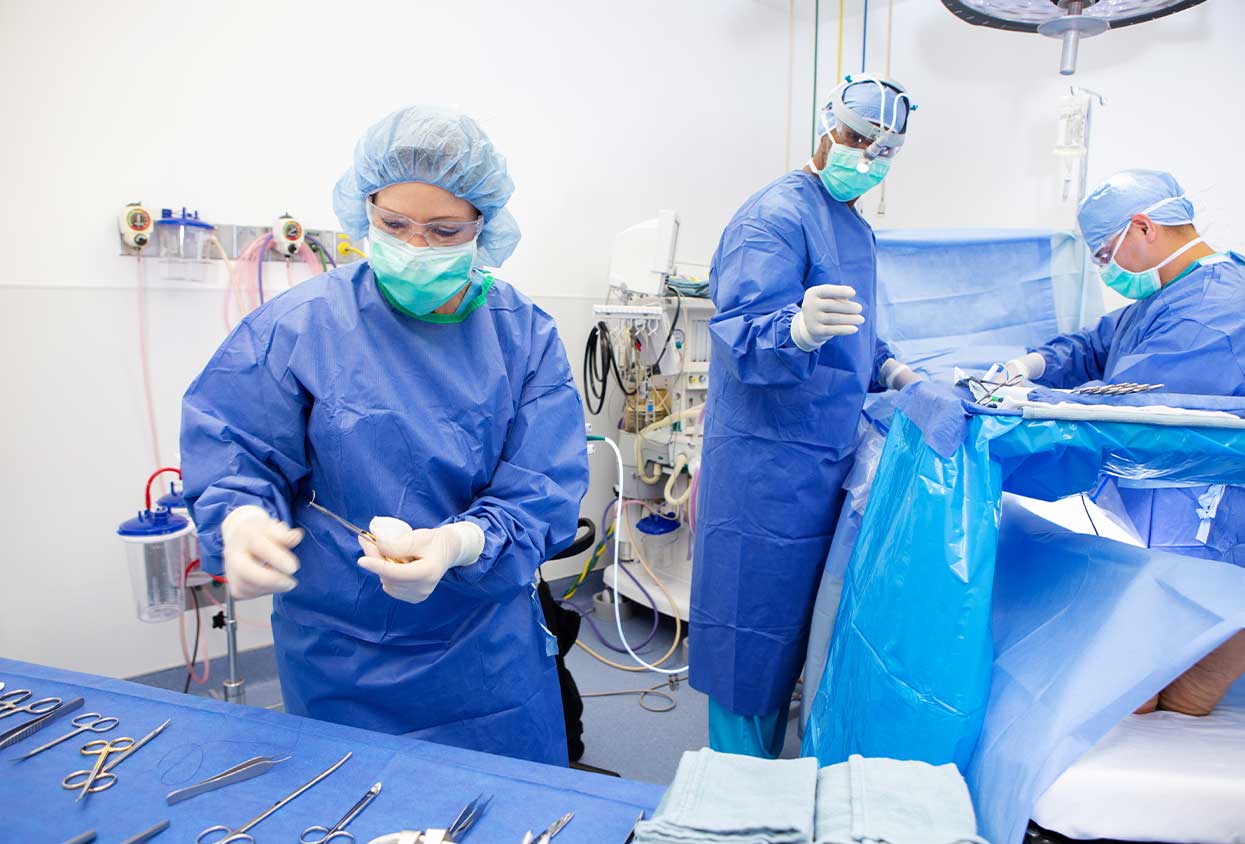
Every OR team knows the king of the morning where the plan falls apart before the first incision. The instrument set is incomplete, a tray is still in sterile processing, the flash sterilizer is running, and the surgeon is waiting. If your goal is to eliminate tray chaos and reduce friction in your ASC so every surgery starts on time, the first step is to see chaos for what it is, a production problem rather than a people problem. And a production problem can be engineered out.
The obvious cost of tray chaos is the late start. The deeper cost is the uncertainty tax your whole team pays in advance. When sets are unpredictable, staff plan for the worst case, surgeons brace for surprises, and the schedule carries slack that nobody wants. A single bad morning does not just delay one case; it ripples. One analysis of operating room delays found that an early delay tends to trigger more delays later, a documented domino effect that turns one missing tray into an afternoon that never quite recovers.1
Most friction traces back to a handful of repeat offenders, and nearly all of them live in the reprocessing and handling chain rather than in the surgery itself.
The flash sterilization point is worth dwelling on, because it is a direct readiness signal. A study of immediate-use steam sterilization during hip and knee arthroplasty found only 9.5 percent of flash events had an acceptable clinical indication, while 37.5 percent were performed just to support OR turnover.2 In other words, a large share of flash use is the system compensating for instruments that were not ready when they needed to be.
Each of these sources of friction shares a root cause: the number of steps a reusable set passes through before it reaches the field. Transport, decontamination, inspection, assembly, sterilization, and storage steps each introduce a chance for something to go missing, get damaged, or arrive late. Treating the symptom with heroics during one day is exhausting and unreliable. Removing the steps that create the symptom is what actually fixes it.
The way to remove friction is to remove the steps that introduce it. Single-use, surgery-ready™ kits do exactly that. They arrive sterile and complete, with the same contents and the same layout every time, so the setup is reproducible rather than improvised.
Friction is not only an efficiency problem, but it can edge into a safety one, and this is where the argument needs care. The point is not that reusable systems are unsafe. It is that every additional processing and handling step is one more opportunity for variation or delays that could contribute to infections. A spine surgery study found that preoperative in-room delays of more than one hour were an independent risk factor for surgical site infection, with infection rates of 4.9 percent in delayed cases versus 2.3 percent when preparation was completed on time.3 Reducing avoidable delay, then, is not just about flow; it removes a documented risk factors from the case.
A simple Single-Use, Surgery-Ready™ procedural kit reduces the number of steps, that isn’t even possible when the solution is reusables.
There is a human dividend to all of this that rarely makes the spreadsheet. When everything is there, sterile, organized, and ready, surgeons operate with more confidence, and the day flows. Onboarding gets simpler because there is less idiosyncratic setup to learn, and the training burden on new staff drops. The before-and-after is easy to picture, a case that starts with a scramble versus one that begins with an open, complete procedural kit and a team that already knows the surgery will run the way it is supposed to.
The friction problem and the staffing problem can be the same problem wearing two hats. Reusable workflows depend on experienced sterile processing technicians who know each tray, catch the missing instrument, and keep the reprocessing queue moving. That expertise is exactly what is hardest to hire and hold right now. When a center is short-staffed in SPD or leaning on newer technicians, the variability climbs, and the chaos gets worse, precisely when the team has the least slack to absorb it.
Single-use, surgery-ready™ systems lower the skill dependency. A complete, sterile, pre-organized kit does not need an expert to assemble it correctly under time pressure, because the assembly already happened upstream, under controlled conditions. That reduces technician-to-technician variability, shortens onboarding, and makes the OR less fragile on the days when staffing is thin and procedures are non-stop. For an administrator, that resilience is very worthwhile because it protects the schedule from the one of the hardest to control variables.
It also changes what a tough day feels like. With reusables, a staffing gap can cascade into late starts, flash sterilization, and a frustrated team. With a surgery-ready™ kit, the same gap is far less likely to derail the day’s procedures because the readiness was built in before anyone walked through the door.
You eliminate tray chaos and reduce friction in your ASC by designing the variation out, not by asking the team to absorb it. Single-use, surgery-ready™ systems shorten the handling chain, standardize the setup, and remove the readiness gaps that can push starts late and turn one delay into many. Reliability, it turns out, is a design choice, and a no-drama OR is what that choice looks like in practice.
ECA Medical builds surgery-ready™ solutions designed to make every case start the same reliable way. As the world leader in single-use, sterile-packed instruments and kits, we help ASC and OR teams trade reprocessing uncertainty for predictable, frictionless surgery. Explore why single-use changes the workflow, or start a conversation with our team about improving your OR day.
What is a major cause of OR delays?
Equipment problems and instrument availability are among the most frequently documented causes of operating room delays. One prospective analysis attributed more than half of delays to equipment failure alone, and noted that an early delay tends to cascade into later ones.1 That evidence comes from broader OR literature rather than ASC-specific data, but the operational pattern, readiness gaps creating delay, is exactly what surgery-ready procedural kit and solutions are designed to reduce.
Can single-use systems really reduce reprocessing bottlenecks?
Yes. Because single-use kits arrive sterile and complete, they take entire procedure kits out of the reprocessing queue. That matters because a meaningful share of flash sterilization is driven by turnover pressure rather than clinical need, a sign of bottlenecks that single-use directly relieves.2
How do surgery-ready systems improve surgeon satisfaction?
They deliver consistency without delays. When the set is always complete, and the setup always looks the same, surgeons spend less mental energy managing the environment and more on the procedure. Predictability and a smooth flow are what most surgeons value as much as any single instrument.
Will reducing tray handling lower our infection risk exposure?
It reduces process-dependent variability, which is the more careful way to frame it. Every handling and reprocessing step is another opportunity for variation, and avoidable delay has been linked to higher infection risk.3 Fewer steps and fewer delays mean fewer of those exposures, without claiming that reusable systems are inherently unsafe.
1. Bhangu A, et al. Delays in the operating room: signs of an imperfect system. Canadian Journal of Surgery. 2010;53(3):189–195.
2. Zuckerman SL, Parikh R, Moore DC, Talbot TR. An evaluation of immediate-use steam sterilization practices in adult knee and hip arthroplasty procedures. American Journal of Infection Control. 2012;40(9):866–871.
3. Radcliff KE, Rasouli MR, Neusner A, et al. Preoperative Delay of More Than 1 Hour Increases the Risk of Surgical Site Infection. Spine. 2013;38(15):1318–1323.