When a patient goes into surgery, they assume that every instrument that approaches them is sterile. That expectation is usually met, but the margin for error in surgical instrument reprocessing is narrower than many facilities want to admit. When those margins are missed, the patient absorbs the consequences. Sterile single-use instrument kits change that equation by removing the reprocessing variable from the surgical workflow rather than asking teams to manage it more perfectly.[1][2][3]
That distinction matters. One model depends on a complex sequence of cleaning, inspection, packaging, sterilization, transport, and documentation being executed correctly every time. The other reduces the number of opportunities for contamination before the instrument ever reaches the sterile field.[2][3]
Surgical site infections remain a major burden in U.S. healthcare, with hundreds of thousands of cases occurring annually. Most discussions about SSI prevention focus on antibiotics, skin prep, and surgical technique, but instrument handling before the case begins is also part of the risk picture.[2]
Reprocessing workflows are inherently complex. Instruments move from the OR to decontamination, through inspection and packaging, into sterilization cycles, and then back through transport and storage before the next procedure. Every handoff introduces another chance for delay, documentation gaps, or a break in consistency.[2][3]
One of the clearest signs of strain in this system is reliance on immediate-use steam sterilization, or IUSS. In a study of adult hip and knee arthroplasty procedures, only 9.5% of IUSS events were performed for an acceptable indication, and documentation of core sterilization practices was variable. In the same study, 45.2% of IUSS events occurred because instruments were received unsterile, and 37.5% were tied to operating room turnover rather than a true emergency need.[3]
Another important finding is that delay itself can increase infection risk. A large spine study found that when preoperative in-room time exceeded one hour, the surgical site infection rate rose from 2.3% to 4.9%. That suggests that when instrument or setup delays extend the exposure window before incision, the sterile field may be put at greater risk.[4]
The core weakness of reprocessing-dependent systems is not dramatic failure. It is routine variability. A single cycle depends on trained staff, equipment performance, complete drying, correct packaging, validated parameters, and accurate documentation, all under real-world time pressure.[2][3]
That concern is not theoretical. One case study describing a failure to follow recommended sterilization procedures found that up to 72 patients may have undergone procedures using instruments processed under the wrong autoclave cycle, and the incident was complicated by the fact that OR staff did not routinely document results of integrator strips placed inside each sterilization container.[5]
Sterile single-use instrument kits address this problem by removing multiple human-dependent processing steps from the facility. Instead of depending on repeated in-house reprocessing, the instruments arrive terminally sterilized, sealed, and intended for immediate use. That does not eliminate every cause of SSI, but it does remove a meaningful cluster of process-related risks from the chain of care.[1][2][3]
When a sterile single-use kit reaches the OR, the chain of custody is shorter and easier to verify. There are fewer handoffs, fewer opportunities for contamination during transport or storage, and less dependence on urgent reprocessing when schedules tighten.[1][3]
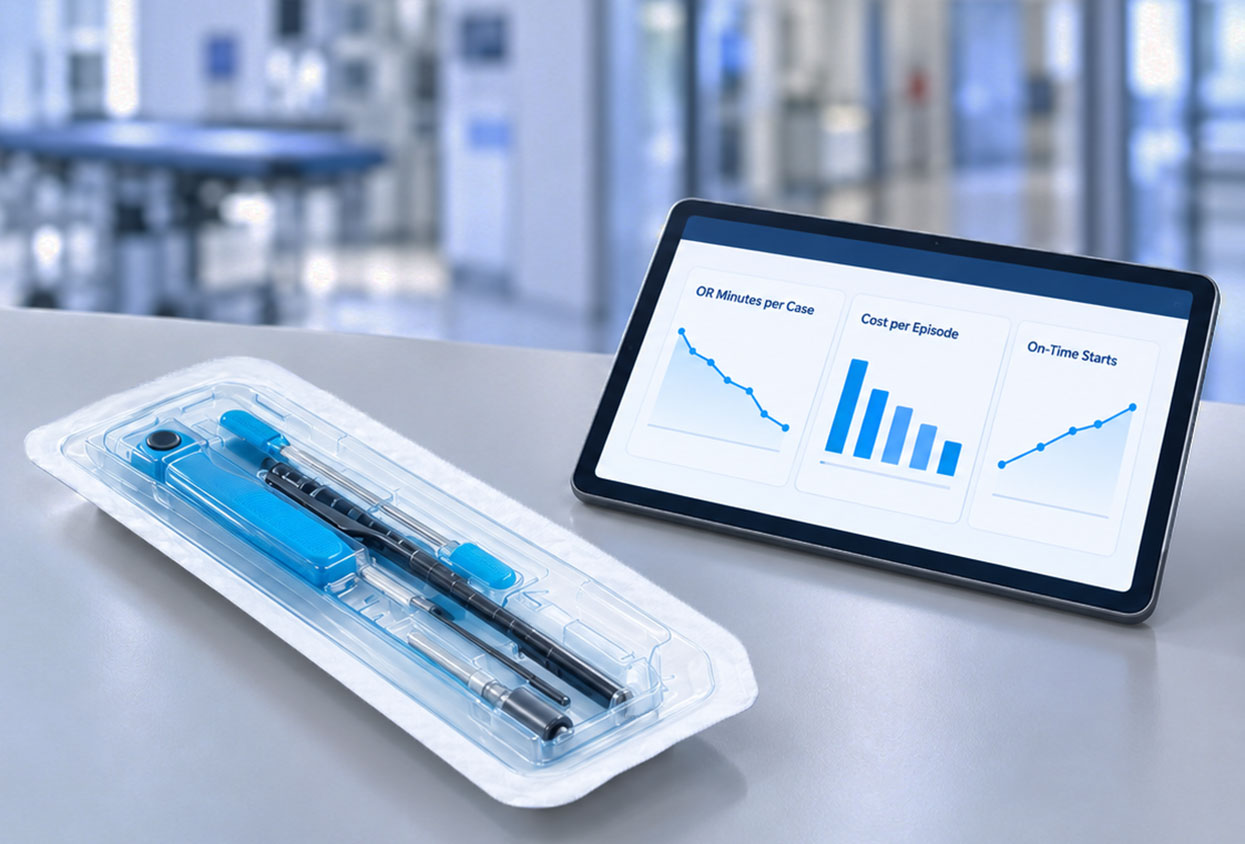
This simplification also has an operational effect. In a total knee arthroplasty cost model based on published literature, the median total cost savings with single-use instruments was $994 per case, and the largest driver of savings was tray sterilization. The same model found that single-use instrumentation reduced turnover-related time enough that an additional case could potentially be completed on 10.8% of 8-hour operating days and 51.0% of 12-hour operating days.[1]
For ASC owners and OR leaders, that matters because infection control and efficiency are not separate conversations. A system that reduces tray handling, sterilization dependency, and turnover pressure can improve both sterility assurance and day-to-day predictability.[1][3][4]
Manufacturer-sterilized, procedure-ready kits shift sterility assurance away from repeated facility-level reprocessing and toward a more standardized supply model. That can help reduce reliance on workarounds such as IUSS, simplify documentation, and make case readiness more predictable.[1][3]
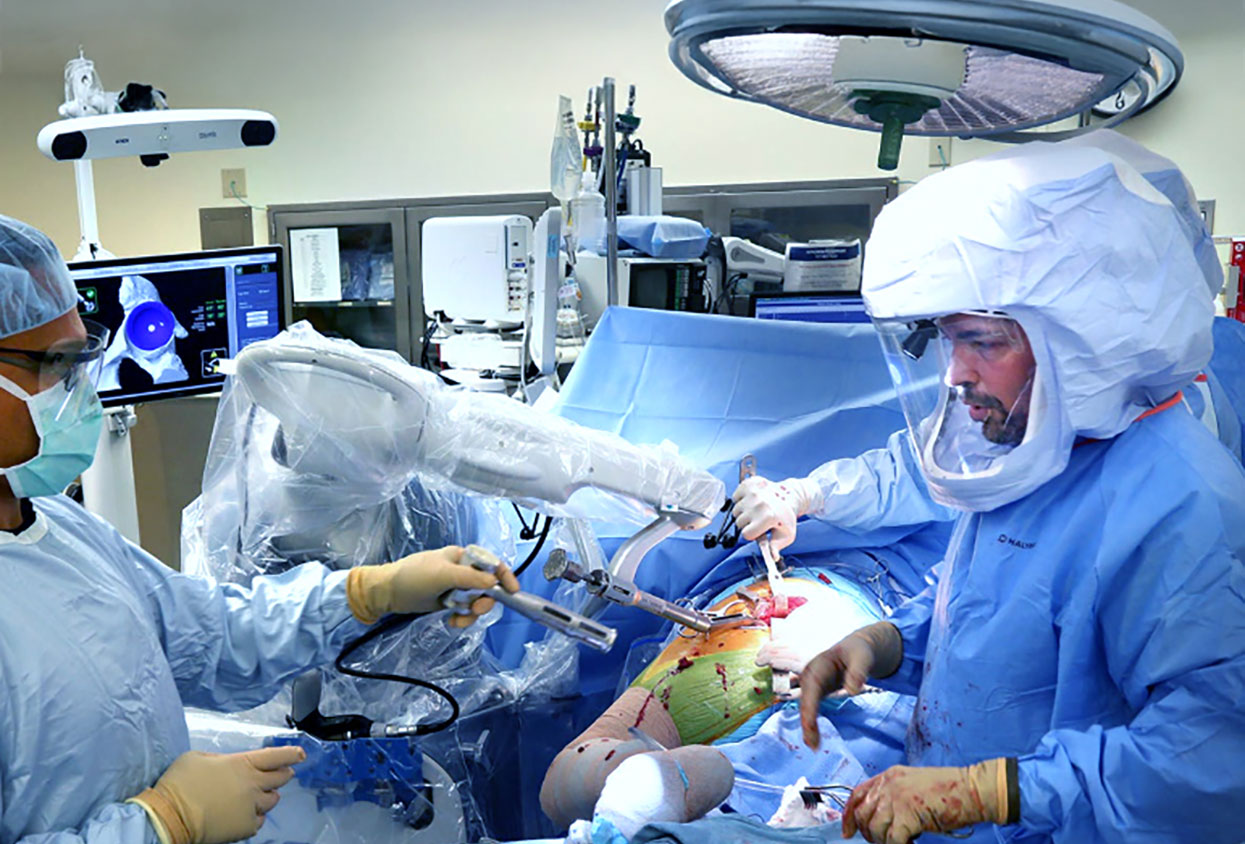
For surgical teams, the practical value is confidence. Instead of questioning whether a tray was delayed, incompletely documented, or rushed through a last-minute cycle, teams can open a sealed kit designed for the procedure and focus attention on the case itself. In high-volume outpatient and hospital environments, that reduction in uncertainty can be clinically and operationally significant.[1][3][4]
Sterile single-use instrument kits help prevent surgical infections by reducing the number of handling, reprocessing, and time-pressure points where contamination risk can enter the system. Evidence on IUSS misuse, delayed pre-incision setup, and tray-related inefficiencies all points in the same direction: fewer process-dependent steps can support safer and more reliable surgical workflows.[1][3][4][5]
For facilities trying to improve both infection prevention and operating room consistency, the strongest advantage of sterile single-use kits is not convenience alone. It is the ability to replace a variable, failure-prone process with a more controlled and repeatable one.[1][2][3]
What is process-dependent infection risk, and why does it matter in surgery?
Process-dependent infection risk is the exposure created when instruments pass through multiple cleaning, packaging, sterilization, transport, and documentation steps before use. Each additional step increases the opportunity for inconsistency, delay, or contamination.[2][3][5]
Why is IUSS considered a warning sign in surgical workflows?
IUSS is intended for limited urgent situations, but one arthroplasty study found that only 9.5% of IUSS events had an acceptable indication. Many events were driven by unsterile instruments or operating room turnover pressure, which suggests that workflow strain is affecting sterility practices.[3]
Can delays before incision really affect infection risk?
Yes. In one large spine study, cases with preoperative in-room time greater than one hour had a 4.9% surgical site infection rate versus 2.3% when the delay was one hour or less.[4]
Do sterile single-use kits only help with infection prevention?
No. Published modeling in total knee arthroplasty found median savings of $994 per case with single-use instruments and showed meaningful turnover-related time savings as well. That means these systems can influence both infection-control risk and operating efficiency.[1]
Why are single-use kits attractive for ASCs and busy ORs?
They reduce dependence on in-house tray reprocessing, simplify setup, and lower the chance that schedule pressure will push teams toward workaround sterilization practices. That combination is especially valuable in environments where turnover speed and case predictability matter.[1][3][4]
[1] Goldberg TD, Maltry JA, Ahuja M, Inzana JA. Logistical and Economic Advantages of Sterile-Packed, Single-Use Instruments for Total Knee Arthroplasty. Journal of Arthroplasty. 2019.
[2] Centers for Disease Control and Prevention. Healthcare-Associated Infections (HAIs). CDC.
[3] Zuckerman SL, Parikh R, Moore DC, Talbot TR. An Evaluation of Immediate-Use Steam Sterilization Practices in Adult Knee and Hip Arthroplasty Procedures. American Journal of Infection Control. 2012.
[4] Radcliff KE, Rasouli MR, Neusner A, et al. Preoperative Delay of More Than 1 Hour Increases the Risk of Surgical Site Infection. Spine. 2013.
[5] Donskey CJ, Yowler M, Falck-Ytter Y, et al. A Case Study of a Real-Time Evaluation of the Risk of Disease Transmission Associated With a Failure to Follow Recommended Sterilization Procedures. Antimicrobial Resistance and Infection Control. 2014.