Over-torquing during medical implant fixation is one of the underacknowledged risks in orthopedic and spine surgery, not because surgeons are not skilled, but because the tools themselves create conditions where getting it wrong is mechanically easy. The ECA Medical TruPWR™ Torque Limiter was built to solve that problem.
Over-torquing during final fixation of medical implants is not a sign of poor surgical technique. It is a possible outcome when using powered instruments in a biologically variable environment without a reliable mechanical constraint.
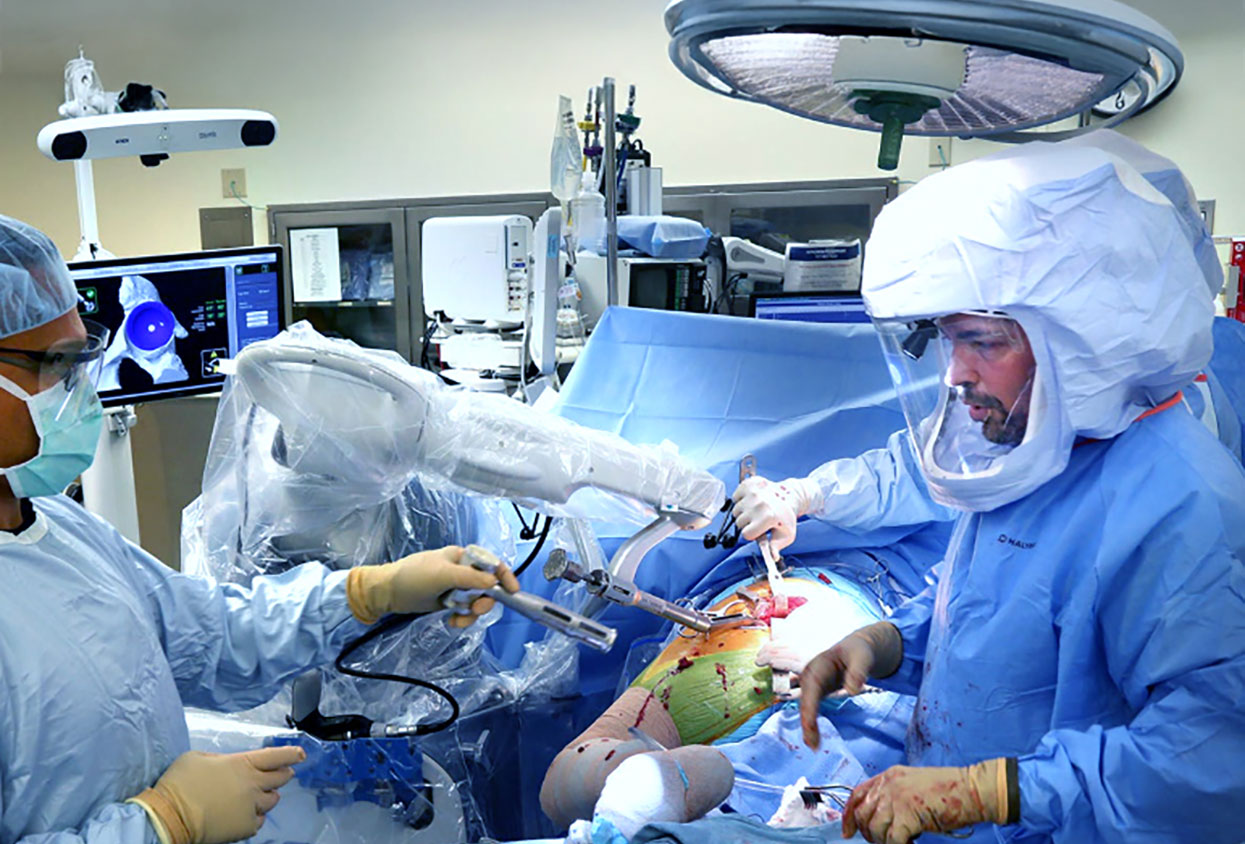
Power tools apply torque at a rate and consistency that human hands cannot match, which is precisely why they are used. But that efficiency comes with a tradeoff: the feedback loop that surgeons rely on for torque control does not work the same way through a power handpiece as it does through a manual driver. By the time a surgeon registers that resistance has peaked, the optimal torque value may already have been exceeded.
Bone quality variation compounds the problem. The cortical density, cancellous architecture, and hydration state of bone vary significantly between patients, between anatomical sites within the same patient, and even between insertion points in the same procedure. Torque that seats one screw correctly can strip the thread engagement in the next. Without a mechanical limit, the only control mechanism is tactile feel, and feel through a power tool is inherently unreliable.
Research published in the Journal of Orthopaedic Trauma examined surgeon perception of cancellous screw fixation and found that even experienced surgeons had significant difficulty consistently identifying optimal torque through tactile feedback alone. In high-volume surgical programs where surgeons perform multiple fixation procedures per day, that variability can accumulate across every case.
The clinical consequences of over-torquing are well-understood but often underestimated in their long-term impact.
When torque exceeds the optimal value for a given screw and bone combination, the thread engagement between the screw and bone begins to fail. Cortical and cancellous threads strip, reducing the pullout strength of the fixation and compromising the mechanical stability that the surgeon worked to achieve. The implant may appear well-seated immediately after insertion, even while the bone-implant interface is already compromised.
At the implant level, excessive torque creates fatigue stress at screw heads and driver interfaces. Micro-cracking at the screw-bone interface can disrupt the biological healing process, delaying osseointegration and potentially contributing to aseptic loosening over time. In constructs that depend on multi-screw fixation working in concert, the failure of one over-torqued screw affects load distribution across the entire construct.
In high-stakes procedural contexts, these consequences carry additional weight. In sternal closure, over-torqued hardware can compromise the chest wall repair in ways that affect pulmonary function. In craniomaxillofacial procedures, thin bone structures leave almost no margin for excessive torque application. In cervical spine surgery, the proximity of neural structures means that fixation integrity is directly connected to patient safety outcomes that extend well beyond the healing period.
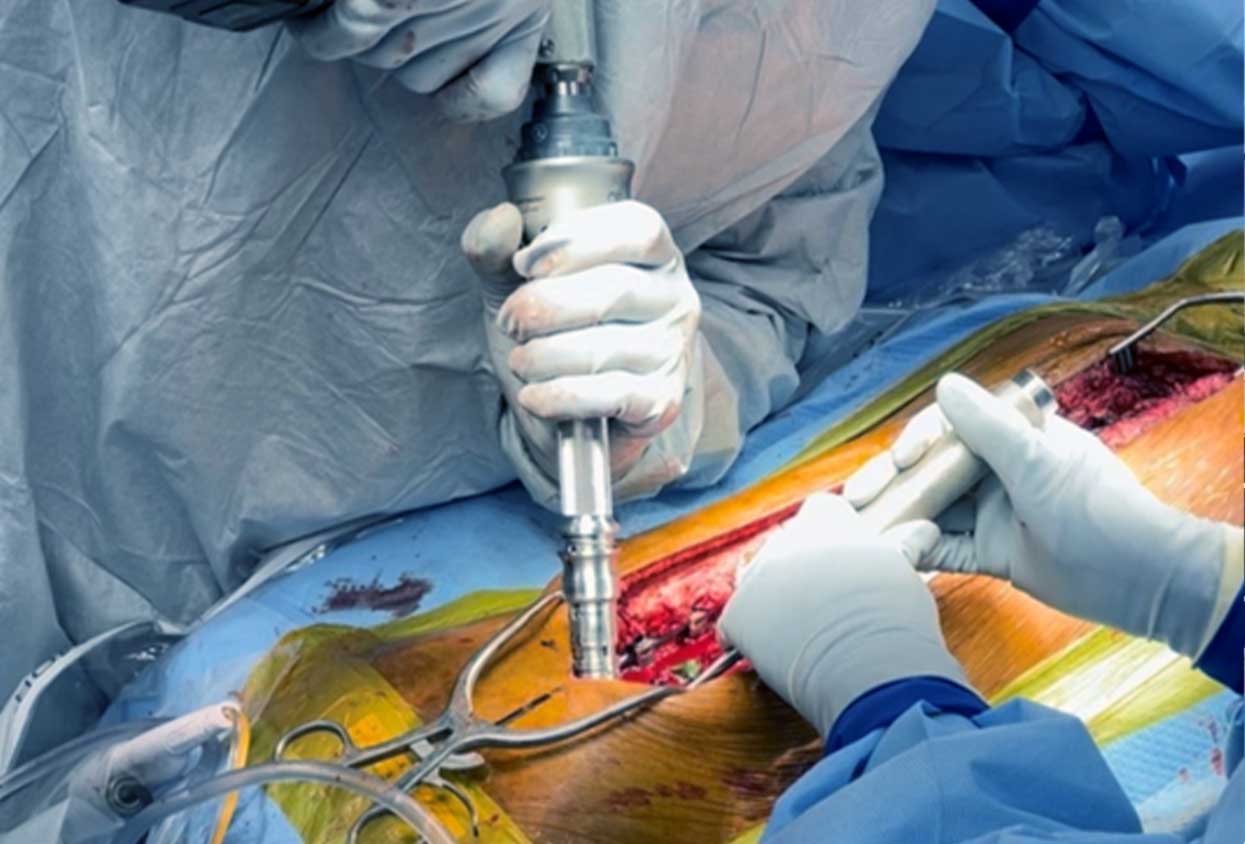
The ECA Medical TruPWR™ addresses the over-torquing problem mechanically rather than relying on tactile feedback. It connects between the surgical power handpiece and the driver tip and disengages automatically when the output torque reaches its pre-set factory value, regardless of how much additional force the handpiece continues to apply.
This mechanical approach means the control mechanism does not depend on what the surgeon can feel, how fatigued they are, or how this particular patient's bone responds to the driver. Once the pre-set limit is reached, the limiter disengages. The implant is protected. The bone is protected. The outcome is reproducible.
Our TruPWR™ Torque Limiter is available in two configurations designed for different procedural demands. TruPWR™ Slim is a low torque version covers set points from 0.5Nm to 2.5Nm, uses a standard AO connection, requires no speed reduction, and is suited for trauma, extremity plating, sternal closure, and CMF applications. The TruPWR high torque version covers 5Nm to 14Nm with a 5:1 speed reduction, is compatible with Stryker, Desoutter and Conmed power handpieces, and is designed for spine fixation, large joints, tibial nails, and other high-load applications.
Both versions are single-use (complete procedure) and sterile-packed, factory-calibrated to their set point for each case. The surgeon gets the same mechanical performance during the first case of the day all the way through the last. A single-use, sterile, pristine and surgery-ready™ TruPWR instrument performs within spec for the complete implant procedure for each patient.
For more on why torque control matters across power-driven surgical procedures, our Surgery-Ready™ torque limiting page covers the clinical and operational rationale in detail.
Reusable torque limiters have existed in surgical instrumentation for many years. The critical difference between a reusable torque limiter and the TruPWR™ Surgery-Ready™ Single-Use Torque Limiter is what repeated sterilization and use does to calibration accuracy over time.
The internal mechanisms of a torque limiter are precision components that operate within tight mechanical tolerances. Repeated heat and pressure from steam sterilization cycles, combined with the wear that accumulates across multiple use cycles, cause those components to drift from their original specification. A reusable torque limiter that reads accurately at 3Nm when new may disengage at 3.4Nm after several dozen sterilization cycles, and there is no straightforward way for an OR team to verify calibration drift without removing the device from service for testing.
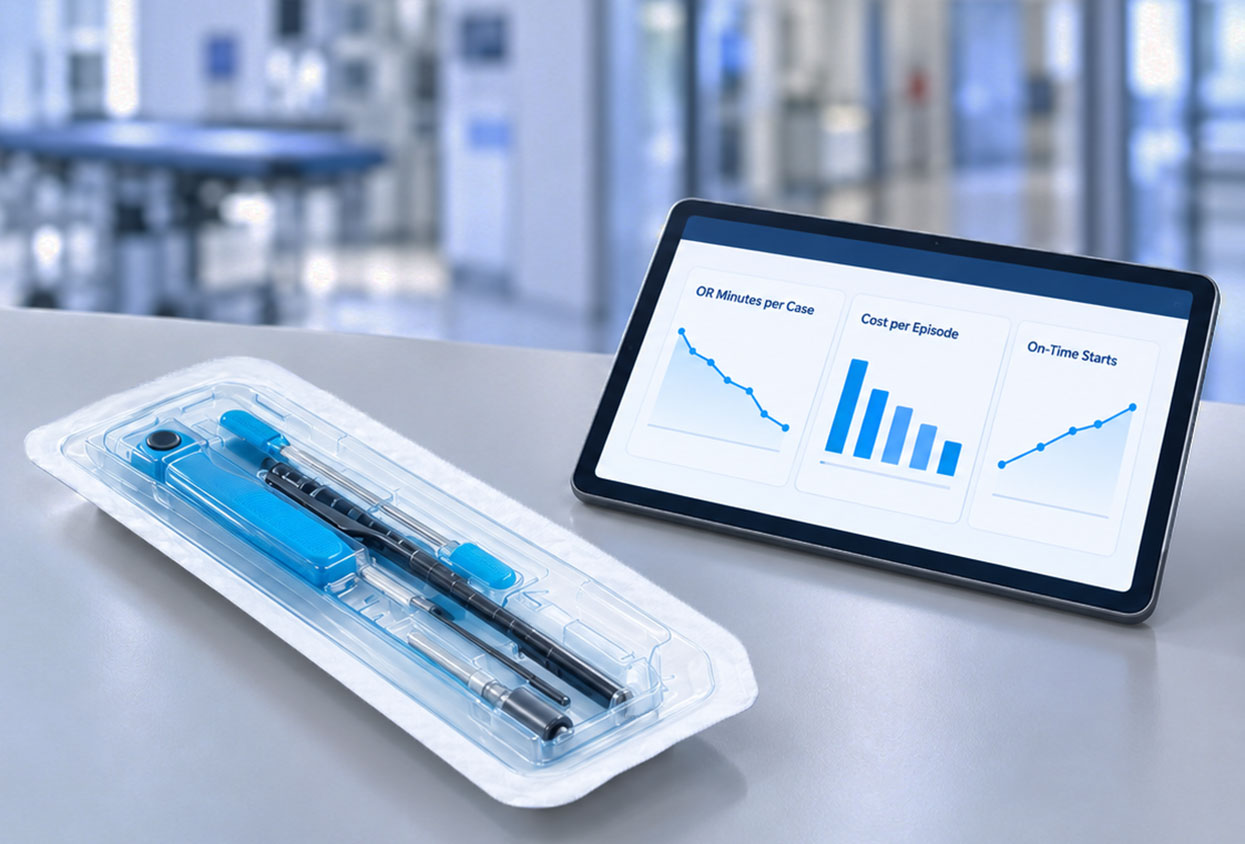
The burden of reprocessing reusable instruments is significant beyond calibration. A published health technology assessment comparing disposable and reusable pedicle screw instrument kits for lumbar arthrodesis found that while total cost was comparable between the two technologies, the disposable kit demonstrated meaningful advantages in patient safety and organizational impact—including the elimination of pre- and post-operative sterilization time and reduced instrument management complexity. [1] Similarly, a cost-modeling study of single-use instruments in total knee arthroplasty found that OR turnover time was reduced by approximately 17.5 minutes per case with single-use instrumentation, and up to 51% of operating days could have accommodated an additional case due to time savings alone. [2]
There is also the matter of what happens when reprocessing goes wrong in practice. A study of immediate-use steam sterilization (IUSS) practices during elective hip and knee arthroplasty found that only 9.5% of IUSS events involved an acceptable clinical indication, while 37.5% were performed simply to support OR turnover—meaning instruments that should have been available were not ready. [3] Unplanned sterilization events of this kind introduce delays, and evidence from spine surgery confirms that preoperative in-room delays of more than one hour are an independent risk factor for surgical site infection—with infection rates of 4.9% in delayed cases versus 2.3% when preparation was completed on time. [4]
A single-use TruPWR™ is factory-calibrated, used once, and discarded. Every case starts with a device performing to its factory specification. There is no calibration verification burden, no uncertainty about whether drift has occurred, and no risk that a device's mechanical history is affecting the outcome of a new case.
Our TruTORQ torque limiting instruments follow the same single-use, factory-calibrated design philosophy for manual applications, giving OR teams consistent performance regardless of whether they are using powered or hand-held instrumentation.
The applications where TruPWR™ creates the clearest value are those where the margin for torque error is smallest, and the consequences of exceeding it are most significant.
In trauma and extremity plating, bone quality varies widely between patients, particularly in elderly or osteoporotic populations. The ability to apply consistent, controlled torque without depending on tactile feedback through a power tool protects fixation integrity and reduces the risk of intraoperative complications at the bone-implant interface. Our ortho and spine instrumentation and torque-limiting systems are built to support these precise applications where procedural reliability translates directly into patient outcomes.
In sternal closure, the combination of thin bone, proximity to the heart and great vessels, and the postoperative demands on the repair make controlled torque application critical. In CMF surgery, the complexity of the facial skeleton and the fine tolerances of the fixation hardware demand precision that power instrumentation alone cannot deliver. And in spine surgery, where multi-level fixation constructs depend on consistent screw purchase across every level, the reproducibility that TruPWR™ provides supports the long-term integrity of the construct.
The ECA Medical TruPWR™ Torque Limiter does not ask surgeons to change their technique. It makes the system around their technique more reliable. By removing torque variability from power-driven procedures, it protects the implant, protects the patient, and gives surgical teams a reproducible outcome standard they can depend on—case after case after case, without adding complexity to the workflow.
We are the global leader in single-use torque limiting instrumentation, with more than 47 years of experience serving medical device leaders worldwide. Our TruPWR™ Torque Limiter is part of our broader Surgery-Ready™ solutions platform, giving surgical programs a complete, calibrated, sterile system for every case. Contact us to discuss how precision torque control fits into your surgical program.
What is a surgical torque limiter, and why does it matter in power-driven procedures?
A surgical torque limiter is a mechanical device that disengages when output torque reaches a pre-set value, preventing additional torque from reaching the screw or fastener. In power-driven procedures, where tactile feedback is reduced or absent, a torque limiter provides the only reliable mechanical constraint against over-torquing. Without it, the risk of stripping thread engagement or damaging the bone-implant interface depends entirely on the surgeon's feel through the handpiece.
How does the TruPWR™ Torque Limiter connect to existing surgical power handpieces?
The TruPWR™ Slim low torque version uses a standard AO connection on the proximal side and can attach to any surgical power tool with an AO connector or chuck. The TruPWR high torque version is compatible with Stryker, Desoutter and Conmed power handpieces and includes a 5:1 speed reduction designed for higher-torque applications. Both versions can include integrated or ¼” square stainless-steel driver tips configured to customer specifications.
What torque ranges does TruPWR™ cover, and how is the right configuration chosen?
The TruPWR Slim low torque instrument supports 0.5Nm to 2.5Nm and is used for trauma, extremity plating, sternal closure, and CMF applications. The TruPWR high torque version covers 5Nm to 14Nm and is suited for spine fixation, large joint, tibial nail and other high-load procedures. The appropriate configuration is determined by the implant system's specified torque requirements, which our team works through with OEM and clinical partners during the program setup and validation process.
Why does single-use torque limiting provide more reliable accuracy than reusable torque limiters?
Reusable torque limiters are subject to calibration drift caused by repeated sterilization cycles and mechanical wear. The precision components that establish a torque limiter's set point change with heat, pressure, and use over time. A single-use device is factory-calibrated and used once. This eliminates any uncertainty of whether a device's use history could be affecting its performance.
Which surgical specialties and procedure types benefit most from a power torque limiter?
The greatest benefit is in specialties and applications where bone quality is variable, where fixation integrity directly affects long-term patient outcomes, or where the margin for torque error is very narrow. Trauma and extremity plating, spine and large joint fixation, sternal closure, and craniomaxillofacial surgery are the strongest clinical applications. Any procedure where a power handpiece drives screws into bone benefits from mechanical torque limiting control.
1. Ottardi C, Damonti A, Porazzi E, et al. "A comparative analysis of a disposable and a reusable pedicle screw instrument kit for lumbar arthrodesis: integrating HTA and MCDA." Health Economics Review. 2017;7:17. https://doi.org/10.1186/s13561-017-0153-7
2. Goldberg TD, Maltry JA, Ahuja M, Inzana JA. "Logistical and Economic Advantages of Sterile-Packed, Single-Use Instruments for Total Knee Arthroplasty." The Journal of Arthroplasty. 2019;34(9):1876–1883. https://doi.org/10.1016/j.arth.2019.03.011
3. Zuckerman SL, Parikh R, Moore DC, Talbot TR. "An evaluation of immediate-use steam sterilization practices in adult knee and hip arthroplasty procedures." American Journal of Infection Control. 2012;40(9):866–871. https://doi.org/10.1016/j.ajic.2011.11.006
4. Radcliff KE, Rasouli MR, Neusner A, et al. "Preoperative Delay of More Than 1 Hour Increases the Risk of Surgical Site Infection." Spine. 2013;38(15):1318–1323. https://doi.org/10.1097/BRS.0b013e31828f1f0b