Launching an orthopedic implant involves far more than finalizing the implant itself. Before surgeons can use the device, they need a complete, validated set of instruments to prepare the site, place the implant accurately, and complete the procedure efficiently. Those instruments must be organized, protected, packaged, labeled, and delivered in a configuration that supports clinical workflow and distribution requirements.
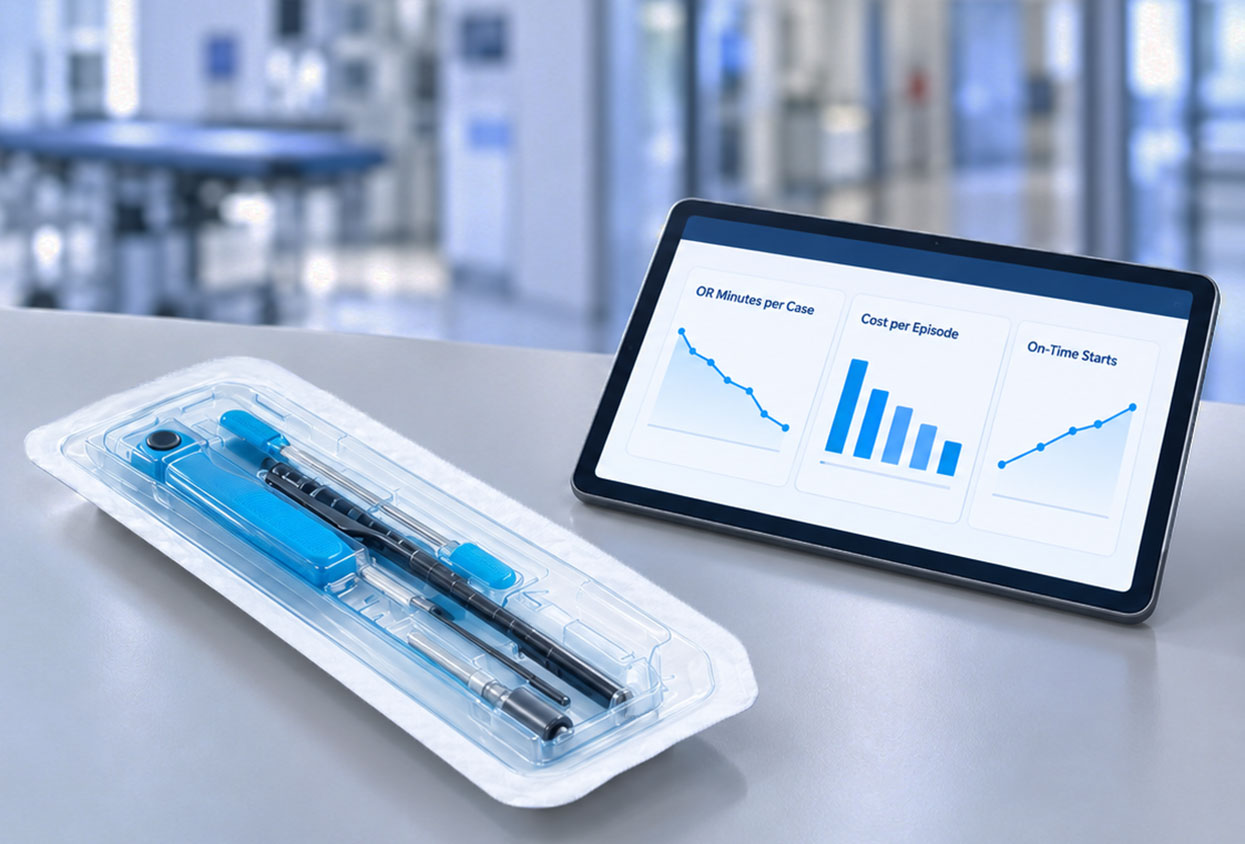
An ECA Medical Surgery-Ready™ Kit provides the instrument system required to perform the procedure—not the implant itself. It brings the required instruments, trays, sterile barriers, packaging, labeling, and supporting documentation together in a purpose-built configuration designed for the operating room. Managing these elements as one coordinated solution can help orthopedic companies avoid fragmented development activities, late-stage compatibility problems, and preventable launch delays.
For an implant company, the surgical instrument kit should advance in parallel with implant development rather than become a downstream packaging or fulfillment task. Early coordination of instrument design, tray configuration, packaging, sterilization approach, labeling, and validation creates a more predictable path to commercial readiness—and helps ensure that, when the implant is ready to launch, the surgical team has the instruments needed to use it.
Bringing an implant system to market requires instruments, trays, sterile barriers, packaging, labeling, and distribution to progress on the same timeline as the implant itself. In practice, that involves:
Coordinating separate suppliers for instruments, trays, packaging components, labels, and sterile barriers—each with its own lead times and change-control processes.
Managing handoffs among design, manufacturing, quality, regulatory, supply chain, and commercial teams, where a delay in any one function can hold up the rest.
Ensuring the instruments support how surgeons actually perform the procedure, not simply what the implant requires on a component list.
Building a reusable tray program, including cleaning validation, sterilization validation, maintenance, tracking, and coordination with every facility that will use it.
Accommodating late-stage design changes without creating packaging, labeling, manufacturing, or validation delays.
• Establishing inventory and distribution processes that work reliably before the first case is scheduled.
• Scaling from a limited release with a small group of surgeon evaluators to broader commercial adoption.
Traditional reusable instrumentation may not always be the best choice. For a new implant launch—particularly for a focused procedure or during early commercialization—a reusable model can introduce operational complexity beyond what the launch requires. Research on hospital sterile processing has described conventional reprocessing as logistically demanding, citing separation between operating room and sterile processing staff, high processing volumes, and the continuing burden of inventory management and training as sources of delay and cost.¹
A Surgery-Ready™ Kit is a procedure-specific, single-use surgical kit that arrives ready for use. It contains instruments and supporting components assembled, packaged, and prepared for the intended procedure. Depending on the system and procedure, a kit may include disposable procedure-specific instruments, implant delivery and insertion instruments, supporting surgical accessories, sterile-barrier packaging, and the labeling, instructions, and traceability elements a facility needs to receive and use it.
The Surgery-Ready™ approach is integrated: one development and manufacturing partner, one kit architecture, and one validated packaging and sterilization strategy designed around the implant system and the way the procedure is performed. The appropriate configuration still depends on procedure type, clinical workflow, market strategy, expected case volume, and device-specific requirements.
Consolidating instrument design, kit assembly, packaging, and sterile-barrier development with one partner reduces the number of vendors, interfaces, purchase orders, and project touchpoints involved. Fewer handoffs mean fewer opportunities for miscommunication or late-stage incompatibilities among instruments, packaging, and production planning.
This allows internal teams to spend more time on implant technology, clinical strategy, regulatory work, and commercialization rather than resolving coordination issues across multiple suppliers.
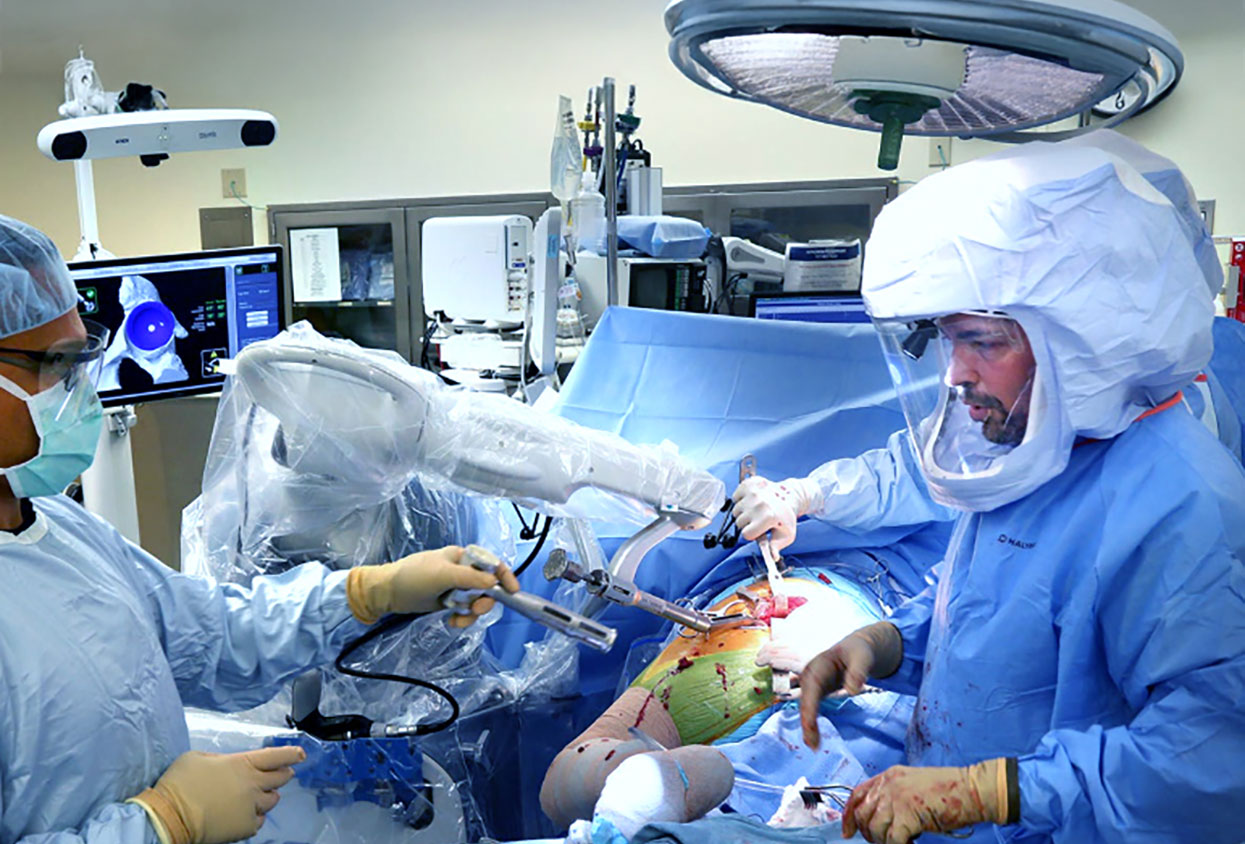
A kit is not simply a collection of instruments; it must support the way the procedure is performed. Selecting instruments around the specific procedural steps can reduce unnecessary components, while intentional organization can help the operating room reach readiness faster.
Early design-for-use feedback can identify missing, redundant, or difficult-to-use components while changes are still easier to make. A streamlined kit can also support more consistent setup across users and facilities, which becomes increasingly important as a system moves from a small evaluator group to a broader surgeon base.
A disposable kit eliminates the reprocessing cycle required for reusable instrumentation: cleaning, inspection, sterilization, tracking, and periodic maintenance or replacement. It also reduces the logistics of moving trays among hospitals, distributors, and surgeons, along with the risk that a set arrives late, damaged, lost, or incomplete.
For a company building early market demand, reducing dependence on a large reusable-set infrastructure can support a more controlled rollout without the capital commitment of placing full tray systems at every site.
An implant companyʼs needs change from first case to full commercial rollout. A limited market release differs from a national surgeon evaluation program, which differs again from geographic expansion or a new procedure indication.
ECA Medicalʼs integrated kit platform gives companies a repeatable way to evolve kit configurations as the portfolio grows, supported by manufacturing planning that can scale alongside adoption rather than require a new approach at every stage.
The last mile between manufacturing and the operating room matters as much as the design phase. Sterile, procedure-specific packaging designed for shipment and point-of-use handling, clear configuration management, and reliable traceability all reduce the risk that a case is delayed because a component is unavailable or an instrument set is incomplete.
A solution that is easier for hospitals, distributors, and surgical teams to receive, store, and prepare is more likely to support a smooth launch and consistent clinical use.
Certain situations tend to benefit most from a procedure-specific, single-use kit model:
New orthopedic implant companies preparing for a first commercial launch.
Established companies introducing a new implant platform or procedure.
Systems designed for ambulatory surgery centers or other outpatient settings.
Niche or specialized procedures where a focused instrument set is preferable to a large reusable tray system.
Companies seeking to limit early investment in reusable trays and instrument-set logistics.
Implant platforms that need a consistent, procedure-specific configuration across sites.
Organizations entering new markets that need a scalable instrument and packaging strategy.
Reusable, single-use, and hybrid instrumentation models each have appropriate use cases. The right approach depends on clinical workflow, economics, market needs, and the requirements of the specific device. That evaluation should occur early, alongside implant and procedure development.
Not every supplier relationship accelerates a launch. As a development partner, ECA Medical brings experience in orthopedic and surgical instrumentation, procedure-specific instrument design, design-for-manufacturability support, and manufacturing capability for high-quality surgical instruments and kit components.
Packaging, labeling, and sterile-barrier expertise matter as much as the instruments themselves, as do quality-system discipline, regulatory awareness, and the ability to support a program from prototype through validation, launch, and scaled production.
For an implant company, the value of an integrated partner is not simply having fewer suppliers. It is having a development process that connects instrument design, kit configuration, packaging, manufacturability, quality, and commercial readiness from the outset rather than stitching those elements together after the fact.
Accelerating an orthopedic implant launch requires readiness at the procedure level, not only readiness at the implant level. Surgery-Ready™ Kits can help orthopedic implant companies simplify the path from development to clinical use by integrating procedure-specific instruments, packaging, sterile readiness, and manufacturing coordination into a single, repeatable program.
This approach does not eliminate the complexity of an implant launch, but it can reduce avoidable complexity and provide a more scalable platform as the product portfolio and market adoption grow.
ECA Medical has spent more than 46 years designing, developing, and manufacturing single-use, Surgery-Ready™ instruments and procedure kits for orthopedic, trauma, spine, and extremities systems. The company works alongside implant OEMs from early concept through dock-to-stock delivery.
Talk with ECA Medical about developing a Surgery-Ready™ Kit for your orthopedic implant system—ideally while the implant design and surgical workflow are still being defined.
How long does it take to launch a Surgery-Ready™ Kit with a development partner?
Timelines vary by procedure complexity, instrument count, validation requirements, and packaging configuration. Bringing the right kit-development partner in at the concept stage, rather than after implant design is finalized, can help shorten the path to launch.
What is the difference between designing instruments in-house and partnering with a kit provider?
In-house development requires a company to manage instrument design, manufacturing, packaging, and sterile validation as separate internal or vendor workstreams. A kit-development partner integrates those functions into one coordinated program designed around the specific procedure.
Can a single-use kit support both a limited launch and broader commercial rollout?
Yes. A well-designed kit platform can support an initial evaluation program and scale to broader adoption without requiring a complete redesign at every stage.
Does bringing a kit partner in earlier actually shorten launch timelines?
Earlier involvement allows instrument design, packaging, manufacturability, and validation considerations to be addressed alongside implant development. This can reduce late-stage rework and the delays it often creates.
What should an implant company look for in a Surgery-Ready™ Kit partner?
Look for demonstrated experience in orthopedic instrumentation, procedure-specific design capability, design-for-manufacturability expertise, sterile packaging and labeling knowledge, quality-system discipline, and the ability to support a program from prototype through scaled production.
¹ Agarwal A, MacMillan A, Goel V, Agarwal AK, Karas C. A Paradigm Shift Toward Terminally Sterilized Devices. Clinical Spine Surgery. 2018;31:308–311.