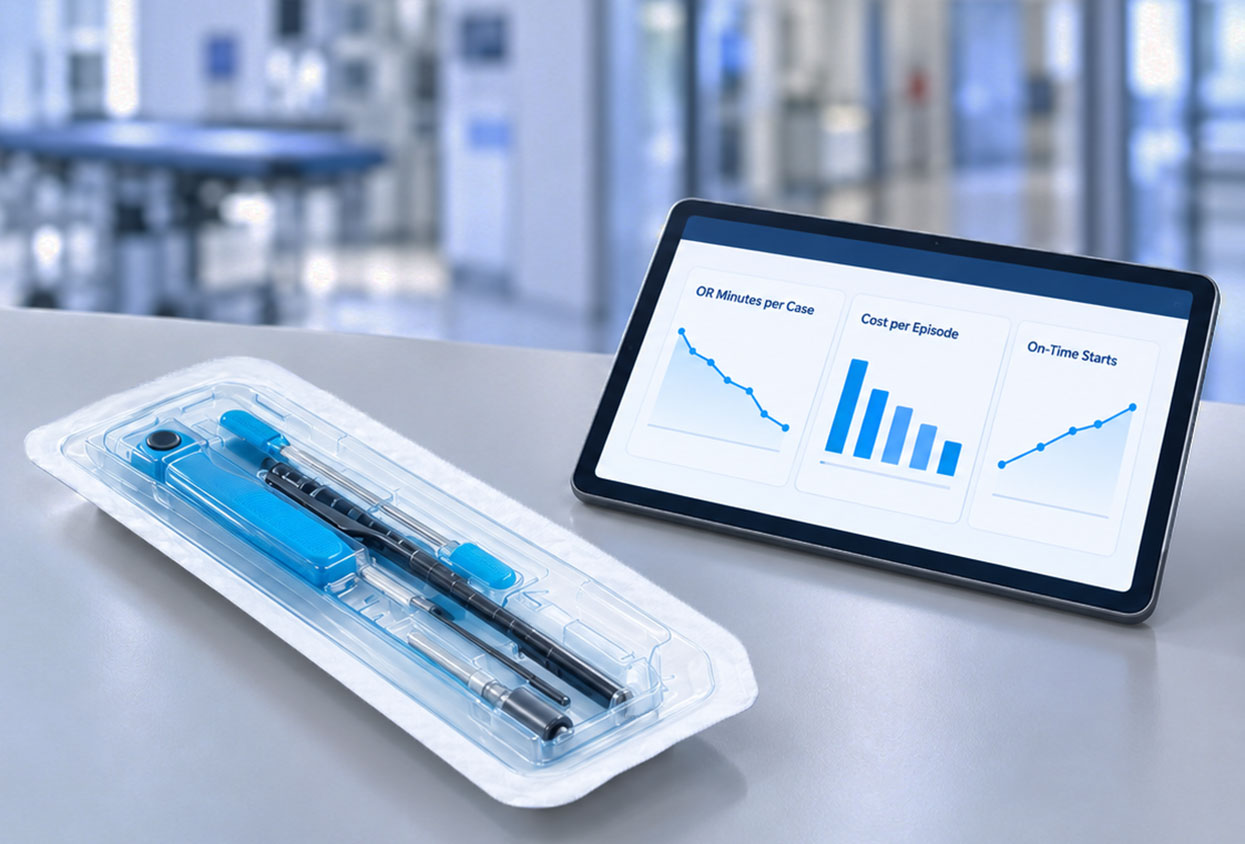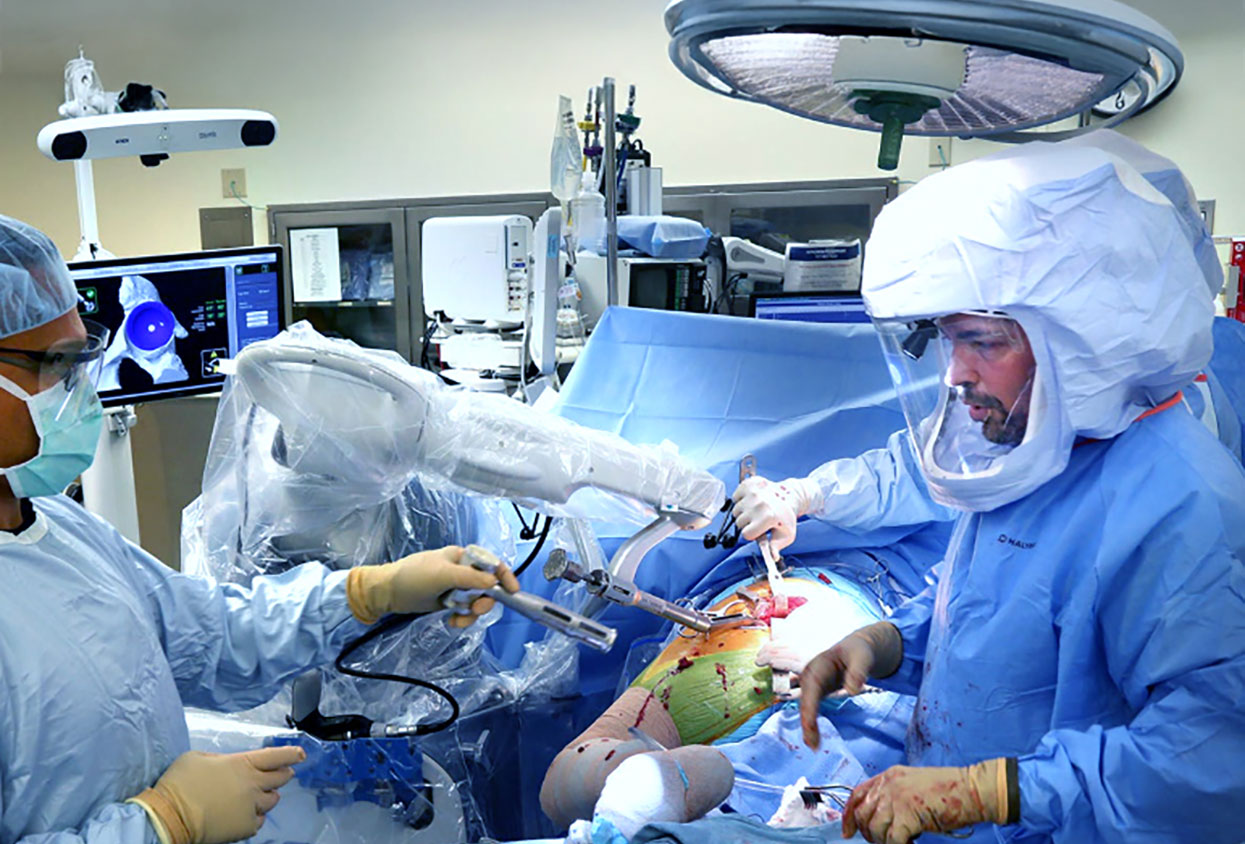
Turnover minutes do not look like a big line item on their own. Multiplied across a full day of cases, they quietly decide how many procedures an ASC can complete, whether the schedule runs into overtime, and how much pressure the sterile processing team carries every single day. Reducing OR turnover time is not a back-office efficiency project. It is the primary driver behind a predictable surgical schedule.
Hospitals can absorb a slow turnover inside a larger system with more rooms and more staff to buffer it. ASCs monetize efficiency, throughput, and schedule reliability far more directly, because the entire facility's daily output depends on how quickly one room can turn from case to case. A few extra minutes per turnover, repeated across a full case list, is the difference between fitting in one more procedure or running the day into overtime.
That dynamic is sharper for ASCs than for hospital-based surgery departments, in large part because of staffing. Sterile processing and OR staffing shortages mean many ASCs are running lean, with fewer people available to speedup a slow turnover without it showing up somewhere else on the schedule. A model that reduces dependence on sterile processing capacity does more than save minutes. It reduces how much of the day's outcome rests on having enough trained staff available at exactly the right moment.
Turnover time is rarely lost to any single dramatic event. It is lost to tray counting, missing or damaged instruments, and sterile processing bottlenecks between cases, the kind of friction that adds a few minutes here and a few minutes there until the day's schedule no longer matches the day's reality. A prospective study that tracked more than 1,500 elective procedures found that delays were the single most common type of error recorded, occurring in over half of all cases, and that equipment failure, not surgeon skill or patient factors, was the leading cause.1 First cases of the day were especially prone to delay, which tends to cascade through the rest of the schedule.
A pre-configured, kit removes several of the steps that increase turnover time: With ECA Medical’s Single-Use, Surgery-Ready™ kits there is no counting loose instruments, no last-minute substitution when something is missing, and no waiting on a tray that has not finished reprocessing.
A pre-configured, kit removes several of the steps that increase turnover time: With ECA Medical’s Single-Use, Surgery-Ready™ kits there is no counting loose instruments, no last-minute substitution when something is missing, and no waiting on a tray that has not finished reprocessing. Independent economic modeling of total knee arthroplasty found that OR turnover time was the single largest cost driver for single-use instrumentation, at a median of 123 dollars per case, but it was also the category where single-use instruments produced the clearest advantage over traditional instrumentation, which carried a median turnover cost of 225 dollars per case.2
Fewer trays to reprocess between cases means less demand on sterile processing labor hours, less pressure to rush a cycle, and less reliance on immediate-use or flash sterilization to get an instrument turned around under time pressure. This matters because flash sterilization is frequently used outside its intended indication. A study of knee and hip arthroplasty cases found that only 9.5 percent of flash sterilization use met an acceptable clinical indication, with documentation often incomplete as well.3 Reducing dependence on flash sterilization is a direct benefit of not needing to reprocess a set of instruments ever. Training also factors in here: estimates for training a new sterile processing technician run into the tens of thousands of dollars, a cost that scales with staff turnover and adds another layer of operational fragility to a reprocessing-heavy model.4
The Goldberg TKA model translated turnover savings directly into scheduling terms. Across a simulated 12-hour OR day, an additional case could be completed on 51.0 percent of operating days with single-use instrumentation, compared with just 0.6 percent of days with traditional instrumentation.The same model found staff overtime was required on only 0.7 percent of 8-hour operating days with single-use instruments, against 37.8 percent of days with traditional instruments.2 Minutes saved at turnover add up and can become either an added case or a day that ends on schedule instead of in overtime.
A facility that turns rooms on time gets reliable starts, reliable pacing, and fewer days where a morning delay pushes every case behind it. Reducing OR turnover time is not a one-time win. It compounds across every case on the schedule, which is exactly why ASCs treat time as the primary economic driver rather than a secondary metric.
There is also a patient-safety dimension to that predictability, not just a scheduling one. Research on spine surgery found that preoperative time in the room longer than one hour was an independent risk factor for surgical site infection, with an infection rate of 4.9 percent compared with 2.3 percent for shorter preoperative time.5 A longer wait before incision generally means the sterile field has been open and exposed for longer, and turnover delays are one of the reasons the time stretches out. Compressing turnover time is not only a throughput question. It is also one of the more direct ways a facility can shorten the amount of time a patient sits exposed on the table before a case actually begins.
None of this argues that every minute of turnover can be engineered away, or that a single change eliminates delay. It argues that turnover time is a lever with a documented, compounding effect on both the day's schedule and the individual case, which is why it deserves the same operational attention as staffing or case scheduling itself.
Reducing OR turnover time comes down to removing the manual steps, the counting, the reprocessing wait, and the missing-instrument scramble that stand between one case ending and the next one starting. Surgery-Ready™ kits are built to arrive surgery-ready. And the data on turnover, sterile processing burden, and case capacity all point in the same direction: less friction between cases means more predictable days.
ECA Medical designs single-use, Surgery-Ready® kits to arrive sterile, complete, and ready to open, reducing setup steps and sterile processing burden for high-turnover ASC and hospital schedules. Talk to ECA Medical about a turnover-time assessment for your case mix.
Q: How much OR turnover time can single-use surgery-ready kits save?
A: Independent economic modeling of knee arthroplasty found that OR turnover was the leading cost driver for both instrument types, but single-use instrumentation carried roughly half the turnover cost of traditional instrumentation, reflecting fewer manual setup and reprocessing steps.
Q: What causes long OR turnover times in ASCs?
A: The most common causes are tray counting, missing or damaged instruments, and sterile processing bottlenecks between cases, with equipment-related issues consistently documented as a leading source of operating room delay.
Q: Can faster turnover let an ASC add more cases per day?
A: Yes. Modeling based on turnover time savings found an additional case could be completed on a meaningfully higher share of operating days when using single-use instrumentation compared with traditional instrumentation.
Q: Do single-use kits reduce sterile processing staffing needs?
A: Fewer trays requiring reprocessing reduces the labor hours, training burden, and technician variability that a sterile processing department has to manage, though staffing needs still depend on overall case volume and mix.
Q: Is flash sterilization still necessary when using surgery-ready kits?
A: Pre-configured single-use kits remove the need to reprocess the included instruments at all, which reduces reliance on flash sterilization as a time-pressure workaround for that portion of the case.
1. Khu KJ, Kaderali Z, Bernstein M. Delays in the Operating Room, Signs of an Imperfect System. Canadian Journal of Surgery. 2010;53:189-195.
2. Goldberg TD, Maltry JA, Ahuja M, Inzana JA. Logistical and Economic Advantages of Sterile-Packed, Single-Use Instruments for Total Knee Arthroplasty. The Journal of Arthroplasty. 2019;34:1876-1883.
3. Zuckerman SL, Parikh R, Moore DC, Talbot TR. An Evaluation of Immediate-Use Steam Sterilization Practices in Adult Knee and Hip Arthroplasty Procedures. American Journal of Infection Control. 2012;40:866-871.
4. Agarwal A, MacMillan A, Goel V, Agarwal AK, Karas C. A Paradigm Shift Toward Terminally Sterilized Devices. Clinical Spine Surgery. 2018;31:308-311.
5. Radcliff KE, Rasouli MR, Neusner A, et al. Preoperative Delay of More Than 1 Hour Increases the Risk of Surgical Site Infection. Spine. 2013;38:1318-1323.