Modern healthcare systems are under increasing pressure to balance clinical excellence with financial responsibility. Hospitals, ambulatory surgical centers, and OEM partners are continuously evaluating how to improve efficiency while maintaining the highest standards of patient safety. Within this evolving landscape, surgical instrumentation has become a critical focus, especially when choosing between single-use and reusable systems.
The discussion around Single-Use vs. Reusable Surgery Kits is no longer theoretical. It directly impacts operational workflows, cost structures, and clinical outcomes. Decision-makers are seeking clarity on which model offers the best value across the entire lifecycle of surgical care. This blog provides a clear, practical comparison of both approaches, helping healthcare professionals make informed, confident decisions.
Single-use surgery kits are pre-sterilized, procedure-specific instrument sets designed for one-time use. These kits arrive ready for immediate use in the operating room, eliminating the need for sourcing, assembling, cleaning, sterilization, and reassembly. Each component is engineered for precision and consistency, ensuring that every procedure begins with instruments in optimal condition.
The growing adoption of Single-Use vs. Reusable Surgery Kits reflects a shift toward standardization and efficiency. By removing variability associated with reprocessing, single-use kits allow surgical teams to focus entirely on patient care rather than instrument readiness.
Reusable surgery kits consist of instruments designed for use across multiple procedures. After each use, these instruments undergo a detailed reprocessing cycle that includes cleaning, sterilization, inspection, and repackaging. This time intensive process requires specialized equipment, trained personnel, and strict adherence to protocols.
While reusable systems have long been the industry standard, they introduce complexity into surgical workflows. The debate surrounding Single-Use vs. Reusable Surgery Kits often centers on whether the traditional model can keep pace with modern demands for efficiency and safety.
Reusable kits are often perceived as more cost-effective due to their lower upfront investment. Facilities purchase a set of instruments once and use them repeatedly, which appears financially advantageous at first glance. In contrast, single-use kits have a higher per-unit cost because they are discarded after each procedure.
However, when evaluating Single-Use vs. Reusable Surgery Kits, it is essential to consider what is included in the cost. Single-use kits typically come pre-configured with all necessary components, reducing procurement complexity and ensuring consistency.
The true cost of reusable systems extends far beyond the initial purchase. Reprocessing requires labor, sterilization equipment, water, energy, and compliance monitoring. These hidden expenses accumulate over time and can significantly impact a facility’s budget.
Inventory management also adds to the financial burden. Tracking, maintaining, and replacing reusable instruments requires robust systems and ongoing oversight. In the context of Single-Use vs. Reusable Surgery Kits, these operational costs often tip the balance toward single-use solutions.
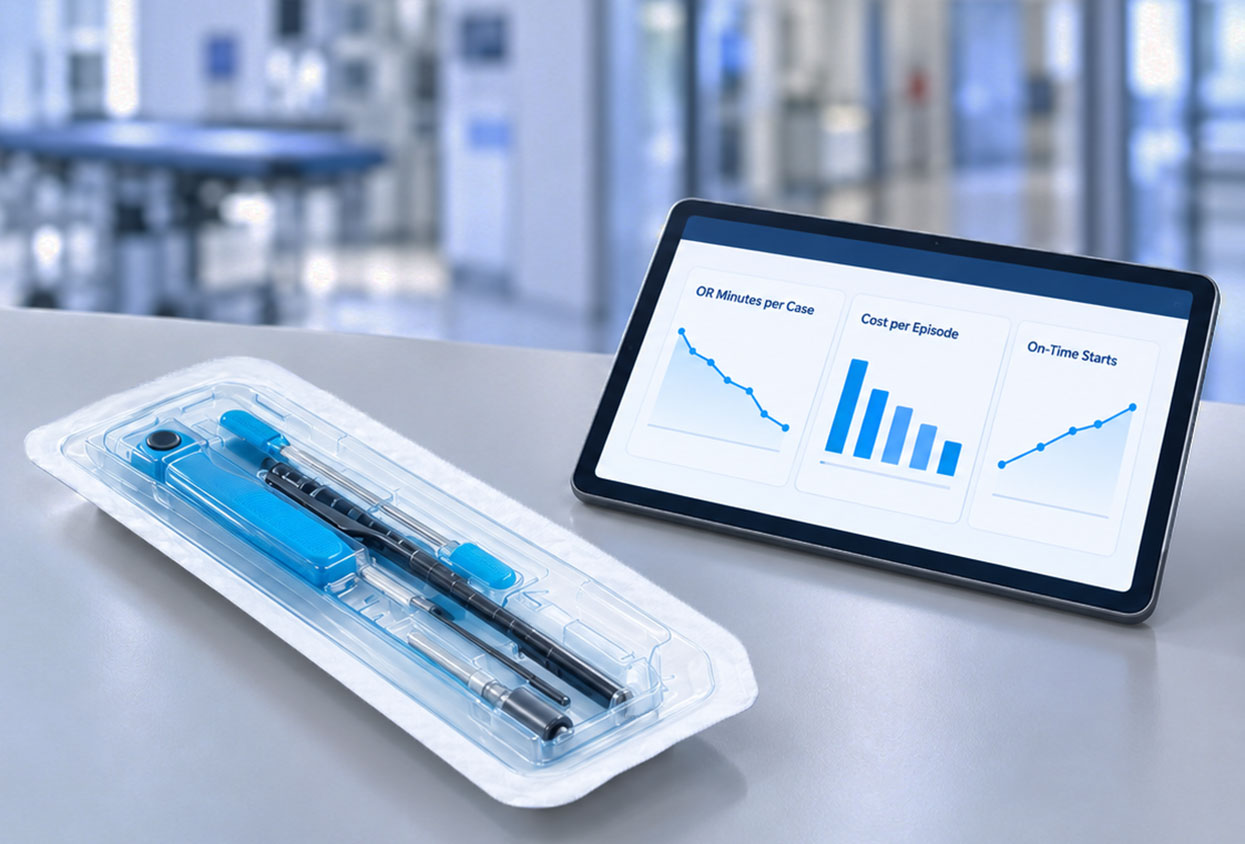
Shifting from reusable to single-use procedural kits can save facilities up to $866.59 per case due to eliminating annual OR productivity losses (58%), mitigating annual surgical site infection costs (38%) and reduced sterilization costs (4%)*.
And a comprehensive cost analysis reveals that single-use kits offer greater predictability. Facilities can forecast expenses based on procedure volume without worrying about fluctuating reprocessing costs or unexpected instrument failures.
When comparing Single-Use and Reusable Surgery Kits, the total cost of ownership is a decisive factor. Single-use systems simplify budgeting while reducing the risk of costly disruptions.
Patient safety remains the top priority in any surgical environment. Single-use kits provide a high level of sterility assurance because they are used once and then discarded. This significantly reduces the risk of cross-contamination.
Reusable instruments, on the other hand, depend on consistent and thorough sterilization. Even minor lapses in the process can lead to serious complications. The discussion around Single-Use vs. Reusable Surgery Kits often highlights this critical difference in infection control.
Healthcare regulations continue to evolve, placing greater emphasis on sterilization protocols and documentation. Facilities using reusable instruments must maintain detailed records and ensure compliance with strict standards.
Failure to meet these requirements can result in legal and financial consequences. In contrast, single-use kits simplify compliance by eliminating the need for reprocessing documentation. This is a key advantage in the ongoing evaluation of Single-Use vs. Reusable Surgery Kits.
Reusable instruments are subject to wear and tear over time. Repeated use and sterilization cycles can affect their performance, potentially compromising surgical precision.
Single-use instruments are designed for consistency. Each kit delivers the same level of performance, ensuring that surgeons can rely on what they expect of their tools for every procedure. This reliability plays a crucial role in the broader comparison of Single-Use vs. Reusable Surgery Kits.
Preparing for surgery involves assembling the necessary instruments and ensuring they are ready for use. Single-use kits streamline this process by arriving pre-configured and sterile, saving valuable time.
Reusable systems require careful assembly of instrument trays, which can be time-consuming and error-prone. When examining Single-Use vs. Reusable Surgery Kits, the efficiency of operating room preparation is a significant consideration.
Faster turnaround times enable facilities to increase procedural volume and improve patient access to care. Single-use kits eliminate reprocessing delays, allowing for quicker transitions between surgeries.
Reusable instruments must undergo sterilization cycles before they can be reused, creating potential bottlenecks. This difference is central to the discussion of Single-Use vs. Reusable Surgery Kits and their impact.
Sterile processing departments play a vital role in maintaining reusable instruments. However, this responsibility adds to staff workload and requires specialized training.
Single-use kits reduce the burden on these departments, allowing staff to focus on other critical tasks. In the context of Single-Use vs. Reusable Surgery Kits, this shift in resource allocation can improve overall efficiency.
Single-use Surgery-Ready™ kits offer a streamlined supply chain with predictable demand. Facilities can scale their inventory based on procedure volume without worrying about instrument availability.
Reusable systems introduce variability, as instruments may be unavailable due to maintenance or sterilization delays. This unpredictability is a key factor in comparing Single-Use vs. Reusable Surgery Kits.
Reusable instruments require dedicated space for storage and sterilization. Single-use kits simplify logistics by arriving packaged and ready for use. They require less storage space and eliminate the need for complex handling processes. These advantages further strengthen the case for Single-Use vs. Reusable Surgery Kits in modern healthcare settings.
One of the primary concerns associated with single-use kits is waste generation. Discarding instruments after each procedure may appear less sustainable.
However, advancements in materials and recycling initiatives have addresses these concerns. The conversation around Single-Use vs. Reusable Surgery Kits increasingly includes innovations that reduce environmental impact.
Reusable systems consume significant amounts of water and energy during sterilization. Over time, this resource usage contributes to their overall environmental footprint.
Single-use kits eliminate the need for reprocessing, reducing energy consumption. When evaluating Single-Use vs. Reusable Surgery Kits, it is important to consider the full lifecycle impact rather than focusing solely on waste. In Lifecycle analysis Single-Use did not create a larger carbon footprint than their reusable counterparts.
Consistency is essential for achieving optimal clinical outcomes. Single-use kits provide standardized instruments for every procedure, reducing variability.
Reusable instruments may vary in condition, which can affect performance. This inconsistency is a key consideration in the comparison of Single-Use vs. Reusable Surgery Kits.
Surgeons rely on their instruments to perform with precision. Single-use kits offer confidence by ensuring that every tool is in optimal condition.
Instead reusable systems can introduce uncertainty if instruments are worn or incomplete. In the ongoing evaluation of Single-Use vs. Reusable Surgery Kits, surgeon experience plays a significant role in decision-making.
Single-use kits are particularly effective in high-volume settings where speed and consistency are critical. They are also well-suited for facilities with limited sterilization infrastructure or those seeking to reduce operational complexity.
Reusable systems may be appropriate for facilities with established sterilization processes and lower procedural variability. In these cases, the ability to reuse instruments can align with existing workflows.
The choice between Single-Use vs. Reusable Surgery Kits ultimately depends on the specific needs and capabilities of each organization.
Innovations in single-use technology have led to the development of precision-engineered instruments that meet the highest clinical standards. Features such as torque-limiting mechanisms and procedure-specific configurations enhance both safety and efficiency.
These advancements are driving the adoption of single-use versus reusable surgical kits across the healthcare industry.
Some organizations are exploring hybrid models that combine reusable frameworks with single-use components. This approach aims to balance cost, efficiency, and sustainability.
As technology continues to evolve, the conversation around Single-Use vs. Reusable Surgery Kits will likely shift toward solutions that integrate the best aspects of both models.
The comparison of Single-Use vs. Reusable Surgery Kits reveals important differences in cost, risk, and workflow. While reusable systems may appear cost-effective initially, their hidden operational expenses and complexity often outweigh the benefits. Single-use kits offer predictable costs, enhanced safety, and streamlined workflows, making them an increasingly attractive option for modern healthcare providers.
Evaluating the total cost of ownership is essential. Decision-makers must consider not only the upfront investment but also the long-term impact on efficiency, compliance, and patient outcomes. By aligning their choice with organizational goals, healthcare providers can achieve both financial and clinical success.
ECA Medical stands at the forefront of this transformation. As a trusted partner, ECA delivers surgery-ready™, single-use instrument and kits that empower surgical teams to perform with confidence and precision. Partner with ECA Medical to streamline your procedures and deliver consistent, high-quality outcomes with advanced single-use instrument solutions.
Q: Are single-use surgical instruments FDA approved?
A: Single-use surgical instruments must comply with FDA regulations under 21 CFR Part 820 (Quality System Regulation) and are subject to FDA registration requirements. ECA Medical's instruments are manufactured in an FDA Registered facility under CGMP standards and hold ISO 13485 certification. Each product class is designed and validated to meet applicable FDA device classification requirements.
Q: What is the true cost of reprocessing reusable surgical instruments?
A: The fully loaded cost of reprocessing a reusable surgical instrument typically ranges from $0.51 to over $1.00 per instrument per cycle, when labor, water, detergents, sterilization agent, tray tracking, inspection, and repair costs are included. High-complexity instruments — those with lumens, hinges, or delicate mechanisms — cost substantially more to reprocess reliably. When OR delays caused by reprocessing failures are factored in (missed cases, surgical team idle time, IUSS use), the true cost often exceeds the nominal instrument cost per case.
Q: How do single-use instruments affect a hospital's environmental footprint?
A: This is a common concern. Single-use instruments do generate packaging and instrument waste. However, reusable instrument reprocessing consumes significant water, energy, and chemical sterilants across hundreds of cycles. Multiple life-cycle analyses in peer-reviewed literature have found that single-use and reusable instruments produce comparable environmental impacts when full reprocessing infrastructure is accounted for. Hospitals with sustainability programs should conduct a product-specific LCA (life-cycle assessment) for a fair comparison.
Q: What does "Surgery-Ready" mean for a surgical instrument kit?
A: Surgery-Ready means the kit arrives pre-sterilized, pre-configured for the target procedure, and validated for immediate use. Scrub technicians open the kit rather than building a tray from individual reprocessed instruments. This eliminates tray assembly errors, missing instrument delays, and IUSS (immediate-use steam sterilization) use — a common root cause of SSI (surgical site infection) risk in high-volume OR programs.
Q: Can single-use instrument kits be customized to surgeon preference?
A: Yes. ECA Medical offers custom Surgery-Ready kit configurations based on surgeon preference cards, implant system requirements, and procedure-specific instrument lists. Custom kit programs are available for hospitals and health systems with sufficient volume in ortho, spine, cardiovascular, or neuromodulation cases.